

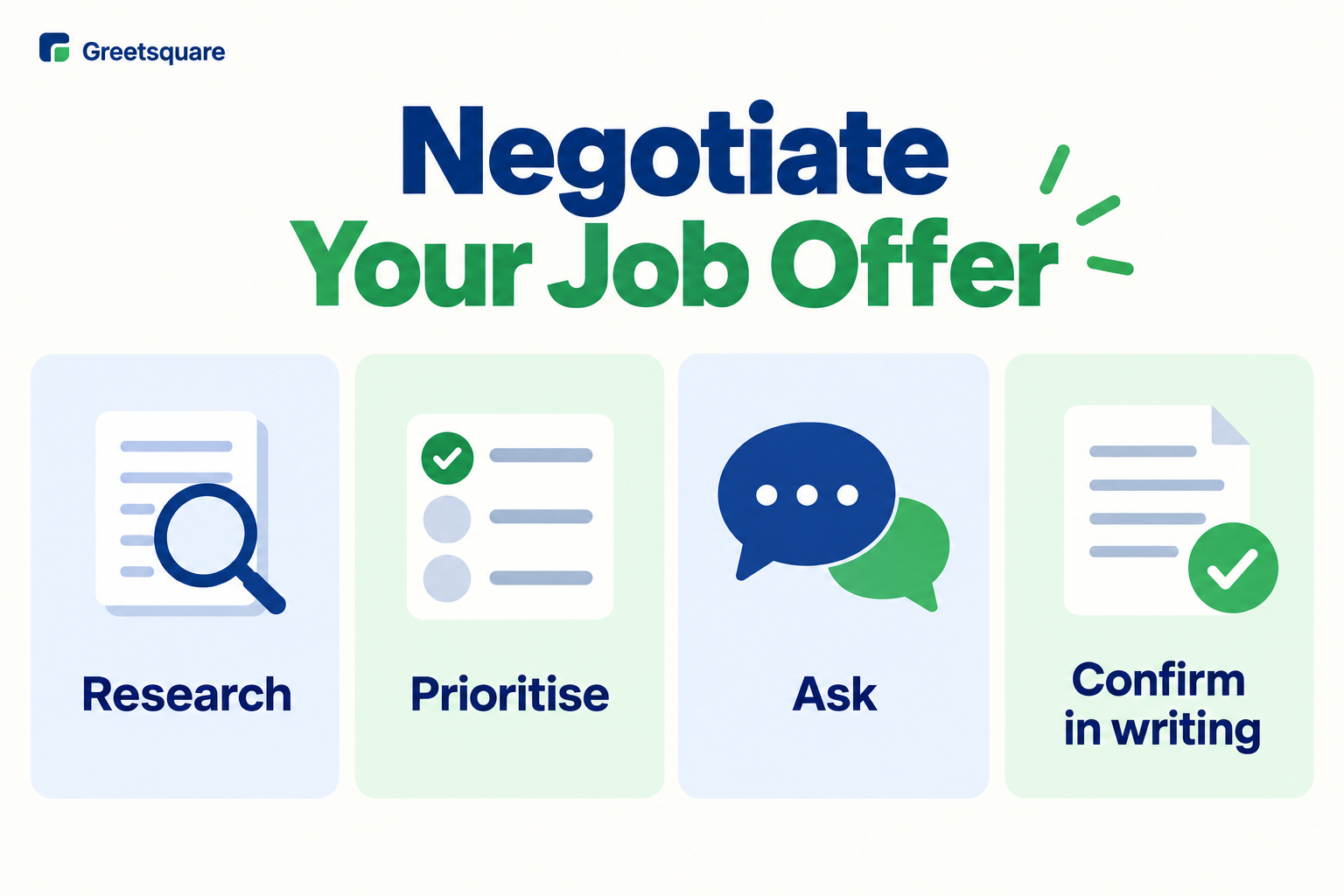
To negotiate a job offer, review the complete terms, research comparable roles and make a clear, reasonable request supported by the responsibilities and experience involved. Discuss your priorities professionally and consider the whole package. Ask for agreed changes in writing so you can make a decision using confirmed information.
Negotiation is a conversation about whether the arrangement can work for both sides. It does not require an aggressive script, an invented competing offer or a demand that the employer meet every preference.
What Singapore Salary Data Can Tell You
MOM’s occupational wage benchmarking guidance explains that pay varies with responsibilities, conditions, experience and ability. Occupational figures group similar jobs and should serve as a general guide rather than a definitive personal entitlement.
Check the definition of the measure you use. Basic salary, gross monthly wages and total annual compensation are not interchangeable. Compare like with like before using a figure to support a request.
Understand the Offer Before Negotiating
Ask for the written offer and review responsibilities, reporting arrangements, location, working hours, start date and compensation. Identify any conditions that remain outstanding. A headline salary does not tell you the full arrangement.
Separate guaranteed pay from variable amounts. Ask how bonuses, commissions or other contingent payments work rather than treating a potential maximum as certain income. Clarify eligibility, timing and the basis for any stated target.
If wording is unclear, ask the employer to explain it. For questions about your specific contractual rights or obligations, obtain appropriate advice. This article provides a preparation framework, not a determination of the legal effect of your offer.
Prepare to Negotiate a Job Offer
Write down three categories: what you need, what you prefer and what you can trade. This is a private decision tool. You do not have to send your full list or personal financial circumstances to the employer.
Choose the most important request or small set of requests. A focused discussion is easier to evaluate than a long list of unrelated demands. Consider what would make the role workable and what would merely be a pleasant extra.
Review the job search guide for stalled applicants if you feel pressure to accept solely because the search has been difficult. The time invested matters to you, but it does not change the actual responsibilities or terms of the role.
Research Comparable Work Carefully
Use multiple relevant sources where possible: official occupational data, current advertisements with stated ranges and credible information about similar responsibilities. Compare occupation, seniority, industry and location rather than job titles alone.
Read the date and coverage of each source. A broad national figure may not describe a specialist role, and an advertised range may reflect several experience levels. Record why each comparison is relevant instead of selecting only the highest number you can find.
Connect the evidence to the offer. If the role includes broader responsibilities than initially discussed, explain that scope. If your experience reduces a particular learning requirement, show the relevant work rather than asserting that you deserve more because you feel confident.
Make a Clear, Professional Request
Begin by confirming your interest. State the term you want to discuss, provide a concise reason and ask whether there is flexibility. Give the employer a concrete request it can evaluate.
Example template: “Thank you for the offer. I am interested in the role, particularly the responsibility for [Scope]. Based on the responsibilities discussed and my experience in [Relevant Example], would you be able to consider a base salary of [Amount]? I would be happy to discuss the overall package.”
Use a figure you can explain rather than copying a percentage from a generic guide. The template demonstrates structure, not a recommended salary level or a prediction of what the employer will accept.
Discuss the Package Beyond Base Salary
Depending on the role and employer, there may be flexibility around start date, working arrangements, leave, learning support or other terms. Ask rather than assume. Some elements may be fixed by policy or the requirements of the work.
Evaluate each item according to its actual value to you. A training budget matters only if the courses and approval process make it usable. A flexible arrangement needs enough detail to understand what is agreed and how it operates.
If a future pay review is proposed, clarify when it occurs and what is being committed to. A promise to review performance is different from a guaranteed salary increase. Do not treat uncertain future benefits as substitutes for confirmed present terms without considering that uncertainty.
Respond to a Fixed Budget Constructively
If the employer says the salary cannot change, ask whether any of your other priorities are flexible. Keep the conversation focused and avoid repeatedly restating the same request after a clear answer.
You may decide the overall offer still works, or you may conclude that it does not. Both are possible outcomes of a useful negotiation. Confidence includes making a considered decision rather than feeling compelled to secure a concession at any cost.
Ask for a reasonable decision period if you need time to review. Respect the agreed deadline, and communicate promptly if you need to request an extension. The employer may or may not be able to provide one.
Handle Competing Offers and Counteroffers Honestly
If another genuine offer affects your timing, explain the relevant deadline without exaggeration. You do not need to disclose every private detail to communicate that you have another decision to make. Do not invent leverage.
If your current employer makes a counteroffer, compare it with the reasons you wanted to leave. Higher pay may address one concern while leaving responsibilities, development or working conditions unchanged. Evaluate confirmed terms rather than general assurances.
Avoid accepting one arrangement casually while intending to keep negotiating elsewhere without considering the consequences. Understand what you are agreeing to and seek advice if you are uncertain about your obligations.
Keep Interview Evidence Connected to Your Request
The strongest negotiation case often draws on the same relevant examples you used during interviews. Be specific about the work you can contribute and the responsibilities you discussed. Do not introduce inflated claims at the offer stage.
Our guide to answering tough interview questions helps you explain those examples clearly. If the employer asks why you are requesting a change, a concise evidence-based answer is more useful than a speech about negotiation tactics.
Listen to the response as well. It may reveal constraints, a misunderstanding about scope or an alternative worth considering. A useful conversation can improve clarity even when the final number does not change.
Confirm the Final Arrangement
Request an updated written offer or clear written confirmation of agreed changes. Check that the document matches the conversation, including dates, amounts and any conditions. Resolve discrepancies before making plans that depend on them.
Keep your acceptance or decline professional and unambiguous. If you accept, ask about the next steps and any remaining checks. If you decline, thank the employer and communicate the decision promptly without an unnecessary critique of the process.
Prepare Before Your Next Offer Conversation
Review the full package, gather comparable evidence and choose your main priority. Write a short request and practise saying it naturally. Decide how you will evaluate a yes, a partial change or a no.
That preparation helps you negotiate with clear information and make a decision you understand, regardless of whether the employer changes the offer.
Frequently Asked Questions
When Is the Best Time to Negotiate a Job Offer?
Once you understand the offer and the employer has indicated it wants to hire you, you can discuss terms before deciding. Earlier conversations may establish expectations, but a written offer provides more concrete information. Follow the process and deadline, and clarify uncertainties before making commitments that depend on the final arrangement.
How Much More Salary Should I Ask For?
There is no universal percentage that fits every role. Use comparable responsibilities, relevant experience and the full package to support a specific request. Check whether your data refers to basic, gross or annual compensation. Choose an amount you can explain rather than assuming that every employer expects the same negotiation margin.
What Can I Negotiate Besides Salary?
Depending on the employer and role, you may discuss start date, working arrangements, leave, development support or other terms. Some elements may be fixed. Prioritise what matters to you and clarify the details of any alternative offered. A possible future benefit is different from a confirmed commitment in the current package.
What If the Employer Says No to My Request?
Ask whether another important term has flexibility, then assess the confirmed offer against your needs. You can accept or decline without treating the conversation as a failure. Avoid repeated pressure after a clear answer, and request reasonable time to decide if needed while respecting the agreed response deadline.



