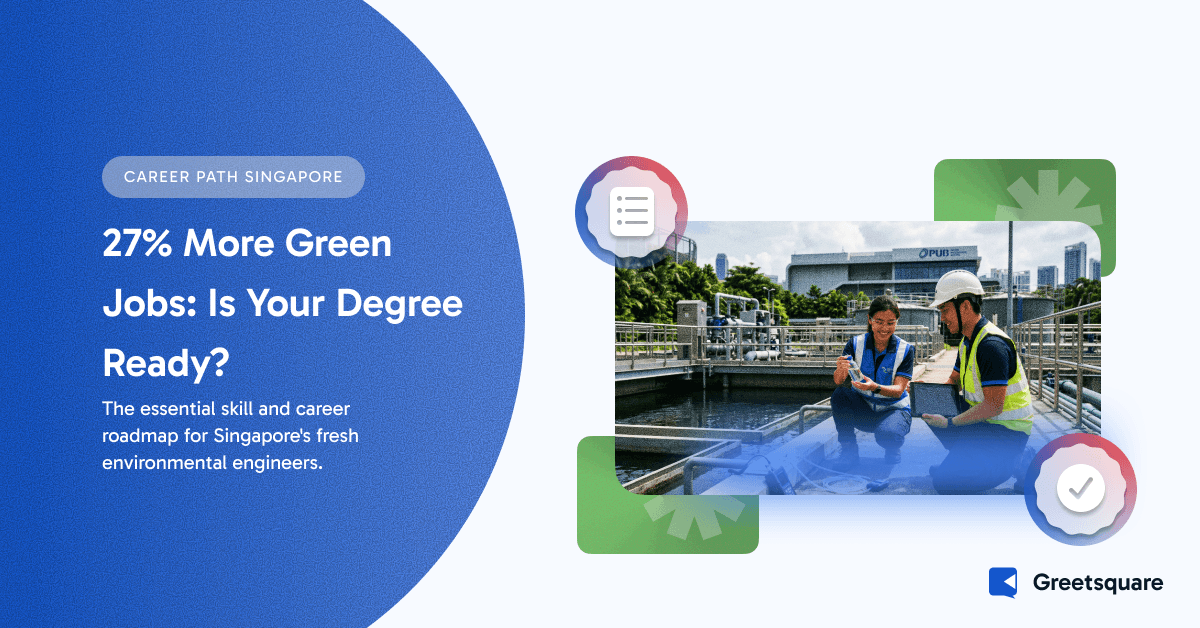
Singapore’s environmental engineering sector is experiencing accelerated hiring demand driven by national sustainability frameworks and climate transition imperatives. Fresh graduates entering this field benefit from structured government programs, cross-sector employer demand, and policy-driven investment in green infrastructure. This guide examines the employment landscape, technical requirements, salary trajectories, and strategic pathways for entry-level environmental engineers navigating Singapore’s sustainability economy.
Defining Environmental Engineering Jobs Singapore Fresh Graduates
Environmental engineering jobs for fresh graduates in Singapore encompass technical roles focused on water quality management, waste treatment systems, air pollution control, environmental compliance monitoring, and sustainability consulting. Entry-level positions typically require bachelor’s degrees in environmental engineering or related disciplines, combined with foundational knowledge of Singapore’s environmental legislation and project-based technical competencies. The role integrates engineering principles with regulatory frameworks to deliver measurable environmental outcomes across public infrastructure, private sector sustainability initiatives, and consultancy-driven impact assessments.
Singapore’s sustainability sector saw a 27% year-on-year increase in green job opportunities, reflecting accelerated demand for roles linked to environmental outcomes. The Engineering, Construction & Infrastructure sector accounted for 29% of all posted sustainability-related jobs, underscoring engineering’s central function in Singapore’s green transition. Fresh graduates entering environmental engineering encounter a labor market shaped by tight vacancy-to-unemployed ratios, government-led sustainability targets, and corporate ESG integration mandates that collectively drive demand for technical and cross-functional environmental skillsets.
Key Takeaways
- Singapore’s green job market grew 27% year-on-year, expanding opportunities for environmental engineers
- Engineering roles represent 29% of sustainability job postings across Singapore’s economy
- Government programs and private sector demand create structured pathways for fresh graduates
- Technical skills combined with regulatory knowledge differentiate competitive entry-level candidates
Key Components of Fresh Graduate Environmental Engineer Roles
Common Entry-Level Positions in Environmental Engineering
Graduate environmental engineer roles in Singapore typically include trainee engineer positions within consultancy firms, assistant engineer appointments in public agencies such as the National Environment Agency or PUB, and project support roles in private sector sustainability teams. Environmental engineering trainee positions often involve rotational assignments across water treatment facilities, waste management infrastructure, and environmental monitoring projects to build foundational technical exposure. Internship programs offered by statutory boards provide pre-employment experience that facilitates transition into permanent graduate engineer positions, while structured graduate schemes within engineering consultancies offer accelerated professional development pathways aligned with Professional Engineer licensing timelines.
Entry-level roles emphasize practical application of environmental impact assessment methodologies, pollution control technology design, and compliance reporting aligned with Singapore’s environmental protection legislation. Fresh graduates supporting renewable energy projects contribute to feasibility studies, environmental baseline assessments, and stakeholder engagement processes that underpin Singapore’s decarbonization objectives. Those entering water and wastewater engineering sectors work on treatment process optimization, distribution network analysis, and stormwater management systems that align with national water security strategies. The diversity of entry points reflects Singapore’s integrated approach to environmental management, where public infrastructure development, regulatory enforcement, and private sector sustainability initiatives create parallel hiring pipelines for fresh graduates.
Core Technical Skills Required
Technical competency expectations span hydraulic modeling software (such as InfoWorks ICM or Bentley OpenFlows), Geographic Information Systems (ArcGIS or QGIS), and statistical analysis tools for monitoring and compliance reporting. Data analysis capabilities enable environmental engineers to interpret water quality datasets, air emission inventories, and waste generation trends that inform regulatory submissions and operational decision-making. Proficiency in environmental monitoring systems, including sensor networks and real-time data platforms, supports pollution tracking and early warning functions critical to Singapore’s high-density urban environment.
Project management skills differentiate competitive candidates, as entry-level engineers frequently coordinate field sampling campaigns, liaise with contractors during construction phases, and prepare technical documentation for regulatory approvals. Understanding of engineering design principles for treatment systems, pollution abatement technologies, and green infrastructure solutions forms the technical foundation for career progression into specialized environmental engineering disciplines. Fresh graduates demonstrating competency in both technical analysis and project coordination accelerate their transition from trainee roles into mid-level engineering positions with greater autonomy and decision-making responsibility.
Knowledge of Environmental Regulations and Compliance
Singapore’s environmental compliance framework operates through legislation administered by the National Environment Agency, including the Environmental Protection and Management Act, Environmental Public Health Act, and sector-specific regulations governing water quality, air emissions, hazardous waste handling, and noise pollution. Fresh graduates must understand permitting processes, environmental impact assessment requirements, and monitoring protocols that govern industrial operations, infrastructure projects, and commercial facilities. Competency in regulatory interpretation enables engineers to advise clients on compliance obligations, design mitigation measures that satisfy statutory thresholds, and prepare regulatory submissions that withstand agency scrutiny.
Air quality management involves understanding ambient air quality standards, industrial emission limits, and pollutant dispersion modeling techniques that inform facility siting decisions and pollution control system specifications. Environmental impact assessment competency requires systematic evaluation of project effects on ecosystems, water resources, and community health, combined with stakeholder consultation processes mandated under Singapore’s environmental legislation. Regulatory knowledge extends beyond technical compliance to encompass broader sustainability reporting frameworks increasingly required by corporate clients navigating ESG disclosure obligations and investor expectations around environmental performance.
Industry Sectors for Fresh Graduates
The sustainability sector in Singapore spans public agencies managing national environmental infrastructure, private consultancies delivering environmental advisory services, and corporate sustainability teams within multinational enterprises implementing decarbonization strategies. Government planning estimates indicate potential creation of up to 55,000 new or upgraded sustainability jobs over 10 years, driven by Singapore’s Green Plan 2030 framework that positions a Green Economy as a key pillar aimed at creating new jobs and transforming industries.
Renewable energy projects in Singapore, including solar installations, waste-to-energy facilities, and emerging hydrogen infrastructure, create demand for engineers supporting feasibility assessments, environmental permitting, and operational optimization. Climate change mitigation initiatives require technical expertise in carbon footprinting and lifecycle assessment (utilizing frameworks like the GHG Protocol and ISO 14064), bridging engineering competency with corporate climate disclosures. Green infrastructure development, encompassing sustainable drainage systems, urban greening projects, and nature-based solutions, integrates civil engineering design with ecological restoration principles.
Water and wastewater engineering remains a cornerstone employment sector given Singapore’s emphasis on water security through NEWater production, desalination capacity expansion, and catchment management enhancement. Waste management engineering roles address circular economy objectives through materials recovery facility design, industrial symbiosis initiatives aligned with GHG Protocol scope 3 emission tracking, and hazardous waste treatment system optimization. Fresh graduates entering environmental consultancy firms encounter diverse project portfolios spanning multiple sectors, accelerating technical skill development through exposure to varied environmental challenges across Singapore’s built environment.
Career Path and Progression for Environmental Engineers in Singapore
Salary Expectations and Growth Opportunities
Environmental engineering salaries for fresh graduates in Singapore typically range from SGD 3,200 to SGD 4,500 monthly, influenced by academic qualifications, internship experience, and employer sector. Public sector appointments through statutory boards generally offer structured salary scales with transparent progression tied to professional certifications and performance assessments. Private consultancy firms may offer higher starting salaries compensated by longer working hours during project delivery phases, while multinational corporations provide competitive packages aligned with broader engineering graduate programs.
Career progression pathways advance from graduate engineer to engineer, senior engineer, and principal engineer designations over 8 to 12 years, contingent on Professional Engineer registration, project leadership demonstration, and technical specialization development. Engineers transitioning into environmental management consulting roles leverage technical backgrounds to provide strategic advisory services commanding higher fee rates and client engagement autonomy. Those pursuing public sector career trajectories access leadership opportunities within environmental agencies, policy development functions, and international technical cooperation programs that extend beyond technical engineering practice.
Mid-career salary growth accelerates for environmental engineers demonstrating expertise in high-demand specializations such as ESG strategy development, climate risk assessment, or integrated water resource management. The fastest growing sustainability role, ESG Analyst, experienced approximately 28% year-on-year growth, illustrating employer willingness to invest in environmental governance competencies that bridge technical and strategic functions.
Professional Licensing and Accreditation
Professional Engineer registration with the Professional Engineers Board Singapore represents a career milestone enabling independent engineering practice, regulatory approval authority, and enhanced professional credibility. Fresh graduates accumulate the required practical experience through mentorship under registered engineers, documentation of project contributions, and demonstration of professional competency through technical assessments. The licensing pathway typically spans 4 to 5 years post-graduation, during which engineers develop specialized technical knowledge, project management capabilities, and professional judgment necessary for autonomous practice.
Accreditation as a Chartered Engineer through institutions such as the Institution of Engineers Singapore provides international recognition valuable for engineers pursuing regional career opportunities or multinational employer advancement. Supplementary certifications in environmental management systems, occupational health and safety, or sustainability reporting frameworks differentiate candidates competing for senior technical and management positions. Continuous professional development requirements embedded within licensing frameworks ensure engineers maintain current knowledge of evolving environmental regulations, emerging technologies, and best practice methodologies.
Public vs Private Sector Roles
Public sector environmental agencies including the National Environment Agency, PUB Singapore’s National Water Agency, and the Ministry of Sustainability and the Environment offer structured career pathways with emphasis on policy implementation, regulatory enforcement, and national infrastructure stewardship. The Ministry of Sustainability and the Environment lists structured internships and scholarship programs, indicating active government pipelines into sustainability policy and environmental roles. Public appointments provide exposure to cross-agency collaboration, legislative development processes, and long-term strategic planning that shape Singapore’s environmental outcomes at systemic levels.
Private sector sustainability roles within consultancies, engineering firms, and corporate sustainability teams emphasize client service delivery, commercial project execution, and results-driven performance metrics. These positions offer greater salary variability tied to project success, faster career progression for high performers, and broader industry exposure through diverse client portfolios. Fresh graduates evaluating sector choices should consider how structured government career development programs compare against private sector commercial experience when mapping long-term professional trajectories, particularly regarding aspirations for acquiring the detailed knowledge outlined in a comprehensive career path singapore framework.
Practical Tips for Landing Entry-Level Environmental Engineering Jobs in Singapore
Enhancing Employability
Engineering employability for fresh graduates strengthens through strategic accumulation of practical experience, technical certifications, and demonstrated project contributions prior to graduation. Environmental engineering internships provide critical exposure to workplace expectations, professional communication norms, and technical methodologies not fully captured within academic curricula. Internship performance often directly influences graduate hiring decisions, as employers assess candidates’ capacity to integrate into project teams, respond to supervision, and deliver work outputs meeting professional standards.
Environmental engineering work experience acquired through final-year projects, research assistant positions, or volunteer environmental initiatives signals proactive professional development and genuine sector interest beyond academic requirements. Fresh graduates documenting quantifiable project contributions, such as data analysis supporting environmental assessments or fieldwork participation in monitoring campaigns, provide concrete evidence of technical competency during recruitment processes. Engagement with professional bodies, attendance at industry seminars, and participation in sustainability competitions build professional networks and demonstrate commitment to ongoing learning valued by environmental engineering employers.
Job Application Strategies
Effective job application strategies require targeted research into employer-specific environmental engineering priorities, recent project portfolios, and published sustainability commitments that inform customized application materials. Fresh graduates should align resume content with specific job requirements by highlighting relevant coursework, laboratory skills, software proficiencies, and internship experiences directly applicable to advertised position responsibilities. Cover letters that articulate understanding of employer environmental challenges and demonstrate knowledge of Singapore’s regulatory landscape differentiate candidates from generic applications emphasizing only academic credentials.
Monitoring environmental engineering job openings across government career portals, consultancy firm recruitment pages, and professional networking platforms ensures timely application submission during peak hiring periods typically following graduation cycles. Understanding environmental engineering positions anticipated for 2026 requires awareness of infrastructure investment timelines, policy implementation schedules under Singapore’s Green Plan, and corporate sustainability reporting deadlines that drive periodic hiring demand. Fresh graduates should prepare for technical interviews by reviewing fundamental environmental engineering principles, practicing problem-solving scenarios involving regulatory compliance challenges, and developing clear narratives explaining their interest in environmental engineering careers within Singapore’s context.
Networking and Professional Development
Building professional networks through participation in Institution of Engineers Singapore events, environmental industry conferences, and alumni engagement activities creates visibility among potential employers and experienced practitioners who provide mentorship and career guidance. Networking effectiveness increases when fresh graduates demonstrate genuine curiosity about environmental engineering practice, ask informed questions about industry trends, and follow up professionally after initial introductions. Informational interviews with practicing environmental engineers yield insights into career trajectory realities, skill development priorities, and employer culture characteristics not accessible through formal job descriptions.
Professional development investments in technical short courses covering emerging areas such as climate adaptation planning, circular economy implementation, or nature-based solutions signal commitment to maintaining current knowledge beyond foundational engineering education. Fresh graduates pursuing project management skills development through formal certifications or structured training programs position themselves for accelerated progression into coordination roles requiring stakeholder management, budget oversight, and cross-functional team leadership capabilities increasingly valued as environmental projects grow in scale and complexity.
Cross-Disciplinary Opportunities for Fresh Graduates
Fresh graduates considering environmental engineering alongside related disciplines benefit from understanding how technical competencies transfer across engineering specializations and sustainability-adjacent sectors. Those exploring civil engineering jobs in singapore for fresh graduates encounter overlapping skill requirements in infrastructure design, construction project management, and regulatory compliance that facilitate lateral career movement. Candidates evaluating mechanical engineering jobs in singapore for fresh graduates discover shared technical foundations in fluid mechanics, thermodynamics, and system optimization applicable to environmental control technologies and energy efficiency initiatives.
Engineers considering electrical engineering jobs in singapore for fresh graduates recognize complementary expertise in renewable energy system design, smart building technologies, and environmental monitoring instrumentation that enhance multidisciplinary project contributions. Those with backgrounds in chemical engineering oil gas jobs possess process engineering knowledge transferable to pollution control systems, industrial waste treatment, and emissions reduction technology applications within environmental engineering contexts.
Fresh graduates exploring computer science jobs fresh graduate opportunities discover growing demand for environmental data science, IoT sensor network development, and digital twin applications supporting smart environmental management systems. Candidates evaluating it jobs fresh graduate singapore positions contribute to environmental information management platforms, regulatory compliance software, and sustainability reporting systems increasingly digitizing environmental engineering practice. Those pursuing data analyst jobs fresh graduate roles apply analytical capabilities to environmental datasets, predictive modeling for pollution trends, and performance tracking supporting evidence-based sustainability decision-making.
Security-conscious engineers considering cyber security fresh graduate jobs address emerging vulnerabilities within critical environmental infrastructure, smart water networks, and industrial environmental control systems requiring protection against operational disruption. The convergence of environmental engineering with digital technologies, advanced analytics, and cross-disciplinary sustainability functions creates diverse entry points for fresh graduates whose technical competencies span multiple domains increasingly integrated within Singapore’s sustainability economy.
Conclusion
Environmental engineering jobs in Singapore present fresh graduates with structured career pathways supported by government policy frameworks, expanding private sector demand, and cross-sector sustainability integration driving long-term employment growth. Success requires combining technical engineering competency with regulatory knowledge, practical experience accumulation, and strategic professional development aligned with Singapore’s green economy priorities. If you are ready to start building your career in environmental engineering, consider joining Greetsquare to access tailored opportunities and insights that connect your technical capabilities with Singapore’s expanding sustainability sector. Register now at https://www.greetsquare.com/register to begin your professional journey.
FAQ
What qualifications do I need for environmental engineering jobs as a fresh graduate in Singapore?
A bachelor’s degree in environmental engineering or related disciplines is typically required. Internship experience and knowledge of Singapore environmental regulations strengthen your candidacy significantly.
What is the typical starting salary for environmental engineers in Singapore?
Fresh graduates can expect monthly salaries ranging from SGD 3,200 to SGD 4,500 depending on qualifications and employer sector. Public sector roles offer structured progression while private firms may offer higher initial compensation.
How long does Professional Engineer registration take?
PE registration typically requires 4 to 5 years of documented practical experience under mentorship of registered engineers. This milestone enables independent practice and enhances career advancement opportunities.