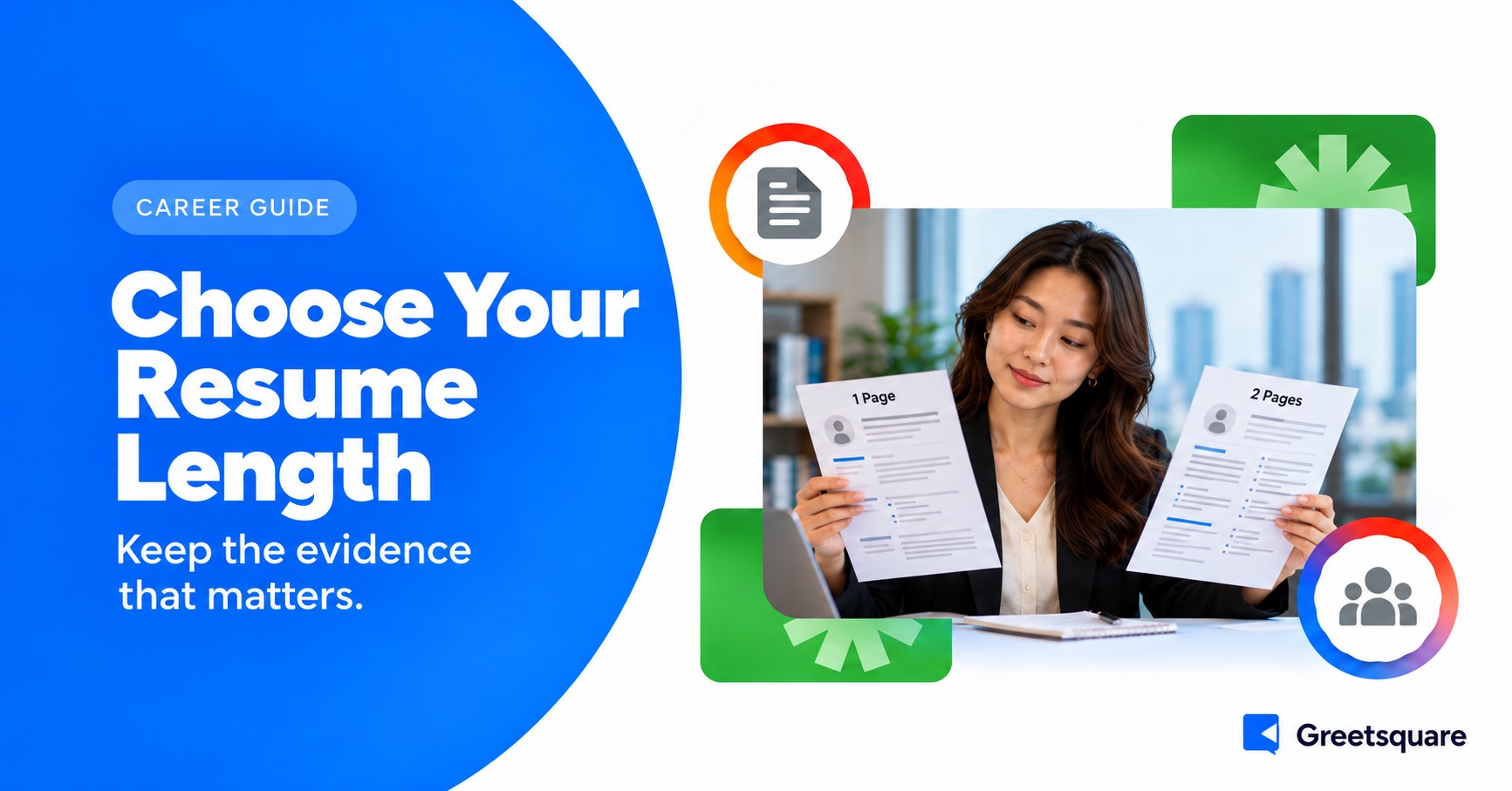
How long should a resume be? Use the shortest readable document that presents the evidence needed for the role, while following any employer limit. One page may be enough for a focused application; more space may be justified by relevant experience. Page count alone does not establish whether a resume is useful.
This guide addresses content and page-length decisions, not the full process of writing a resume. Our resume writing guide covers the wider structure. Start with the vacancy and your evidence rather than compressing everything into a predetermined layout.
What Career Guidance Says About Concision
Harvard’s resume guidance emphasises concise, well-organised information and readable formatting. It also notes that conventions vary internationally. Use those principles alongside the employer’s instructions. A general example from a career service should not override a specific requirement in the application you are completing.
Start With Instructions and the Document Type
Check whether the employer specifies a page limit, template or application form. Follow that requirement even if a generic guide suggests another length. If the instructions are ambiguous about an essential point, ask the recruitment contact rather than assuming an exception applies to you.
Confirm what the employer means by the requested document. An academic CV, a professional resume and a structured application form can have different purposes and levels of detail. Do not remove required research or professional information solely because advice for another document recommends brevity.
Keep supporting material separate where the application permits it. A portfolio or project link may provide depth without placing every detail in the resume. However, the core document should still communicate your contribution; do not rely on the reviewer opening several links to understand your basic qualifications.
Rank Content Before Counting Pages
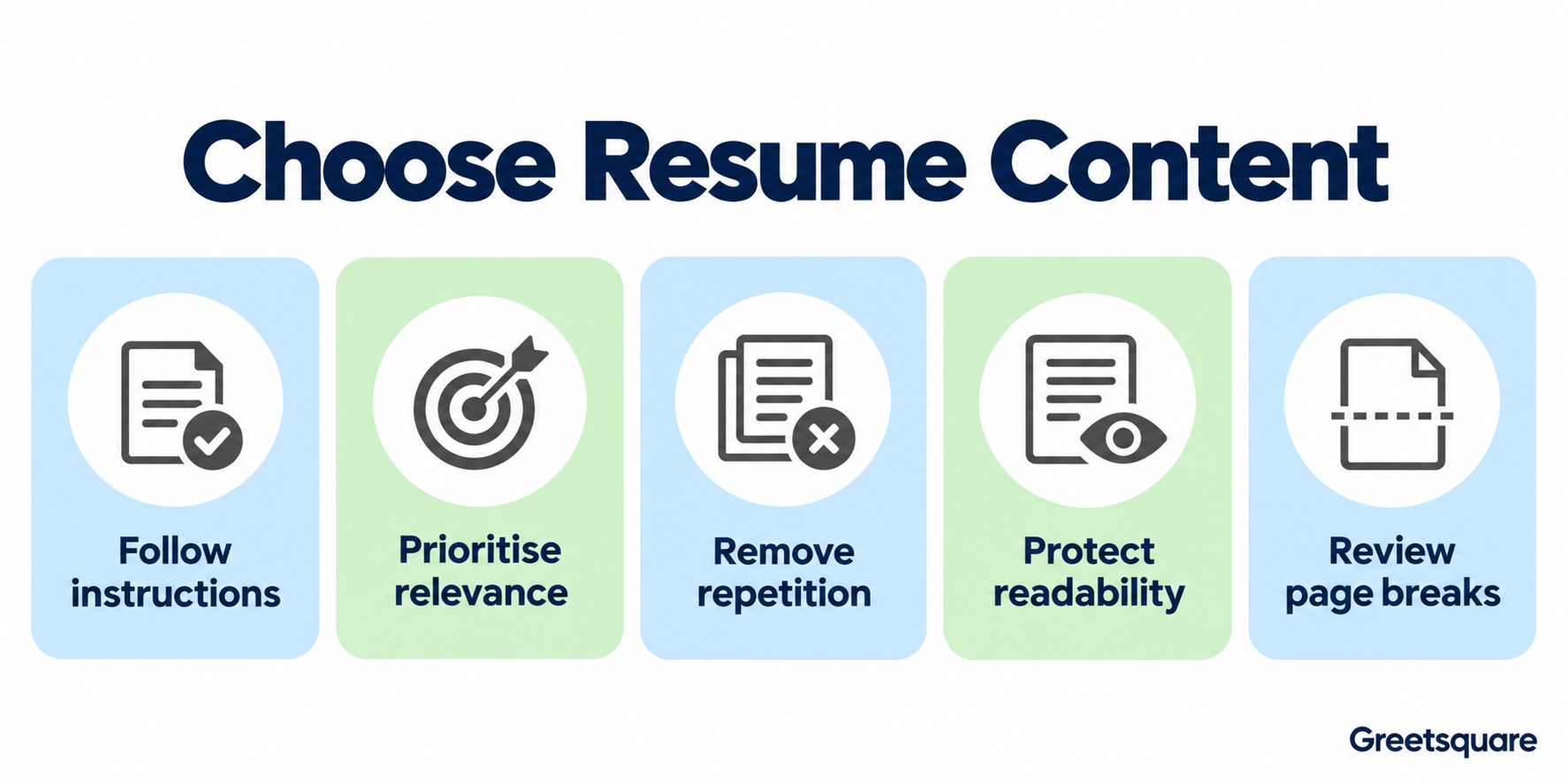
List the role’s main responsibilities and the evidence you have for them. Identify the entries and examples that most directly support the application. These deserve space before less relevant tasks, repeated skills or background that adds little to the reader’s understanding.
For a fictional analyst application, a recent project explaining the question, method and output may deserve more detail than a long list of routine duties from an unrelated earlier job. The right choice depends on the vacancy, not on a rule that every role must receive the same number of lines.
Our resume tailoring guide explains how to select relevant evidence. For length decisions, the practical question is what the reader would lose if a sentence disappeared. If the answer is nothing useful, it is a candidate for removal.
Use One Page When It Covers the Evidence Well
A concise one-page resume can work when your relevant experience, education and skills fit comfortably. This may suit an early-career applicant or a tightly focused application, but career stage alone is not a complete rule. Check whether the page communicates enough evidence rather than merely looking neat.
Do not fill spare space with broad adjectives or unrelated interests just to reach the bottom. Equally, do not remove a strong project explanation to preserve a large decorative header. Let the information determine the space and use clear hierarchy to guide the reader through it.
The resume guide for applicants without work experience covers evidence from study, volunteering and projects. A shorter work history does not mean there is nothing useful to show, but each addition should help explain suitability for the role.
Use Additional Space When It Adds Relevant Evidence
A further page can be useful when it contains distinct information needed to assess your experience. The test is whether it adds meaningful evidence, not whether you have reached a certain number of years. A long career can still contain repeated responsibilities that need less detail.
Give the most relevant recent work appropriate emphasis and consider condensing older or less relevant entries. Keep the history understandable and do not change dates or job titles to make the layout simpler. If you group earlier roles, ensure the organisation and chronology remain clear.
For specialist applications, required qualifications, publications or projects may need space. Follow the relevant instructions and conventions. Avoid applying a universal two-page ceiling to every profession, or assuming that adding more pages automatically demonstrates seniority.
Shorten Content Before Shrinking the Layout
Remove Repeated Points
If several bullets show the same capability with similar evidence, keep the strongest or most relevant examples. A summary, skills list and experience section should not repeat the same sentence three times. Use each section for a clear purpose rather than multiplying keywords without adding information.
Replace Long Background With Useful Context
A bullet may need only a short description of the problem before your action and result. Remove company history and explanations already obvious from the role entry. Check that the remaining wording still makes sense to someone unfamiliar with your employer’s internal terms.
Preserve Readability
Do not solve a content problem by making text difficult to read. Review the document at normal viewing size and in the format you will submit. Clear spacing and headings help the reader assess the information. A crowded single page is not necessarily more concise in practical use.
Check Page Breaks in the Final File
Export the document and inspect every page. Look for a heading separated from its entry, a single line stranded on another page or a large unexplained gap. Rebalance the layout without deleting essential evidence simply to eliminate a minor visual inconvenience.
Ask a reader which qualifications stand out and what they still need explained. Compare that response with the role’s requirements. The role-based resume examples can help you think about information order, while employer instructions remain the final constraint.
If a video introduction is requested, use a Greetsquare video resume to explain a relevant example separately. It should complement a readable written document, with consistent facts. Adding another format does not remove the need to select the written content carefully.
Frequently Asked Questions
Must My Resume Be One Page?
Follow any employer requirement first. If none is given, choose a readable length that presents relevant evidence without repetition. One page can work for a focused application, but removing essential qualifications or shrinking text excessively to reach that count can make the document less useful for the person reviewing it.
Is a Two-Page Resume Too Long?
Not automatically. A second page should add distinct evidence relevant to the role, while the whole document remains easy to follow. Review repeated duties, older entries and unnecessary background before deciding. The useful question is what the additional space contributes, rather than treating page count alone as a quality measure.
Should I Remove Older Jobs to Save Space?
Consider relevance and the clarity of your history before removing an entry. You may be able to condense less relevant roles while keeping accurate titles, organisations and dates. Do not create a misleading chronology or discard evidence the employer needs simply because it falls outside an arbitrary number of years.
Can I Reduce Font Size to Fit More Content?
Protect readability before fitting a target page count. Remove duplication and shorten unnecessary background first, then review the exported document at normal size. A crowded page can be harder to assess than a longer, well-organised resume. Follow any stated format requirements and check spacing, headings and page breaks before submitting.