

To network as a fresh graduate with no connections, identify someone whose work relates to your interests, introduce yourself briefly and ask a focused question. Alumni, university events and professional communities can provide starting points. Aim for a useful conversation before asking for help securing a job.
Networking feels more manageable when you treat it as learning about work. You do not need to entertain a room or deliver a polished sales pitch to build a professional relationship.
What Career Guidance Says About Networking
The NUS job-search resource includes networking within a wider search strategy. This is practical career guidance, not proof that a fixed percentage of jobs is hidden or that formal applications are ineffective.
Use conversations to improve your understanding of tasks, teams and preparation. Continue applying through the employer’s stated process. Networking adds information and relationships; it does not remove eligibility requirements or guarantee an interview.
Choose a Reason to Contact Someone
Start with a role you want to understand. Then look for someone whose experience connects to it. A recent graduate in a junior position may be able to explain everyday responsibilities more directly than a senior executive with a very different job.
Your shared context might be a university, course, event or professional interest. It gives the recipient a reason to understand your message. Do not invent a connection or suggest a mutual contact recommended you unless that actually happened.
If your direction is still broad, use the fresh graduate job hunting guide first. A clearer target helps you choose useful conversations and prepare questions beyond “How do I get a job?”
Build a Small Starting List
Review alumni resources, career events and people you met through internships, volunteering or student activities. Choose a manageable number of relevant contacts. A few thoughtful messages can be more useful than a large set of identical introductions.
Write down why each person’s experience interests you and one thing you hope to learn. Use professional channels and respect directory rules. There is no need to collect private contact details when an appropriate public channel exists.
Someone outside your target industry can still offer general perspective. Ask how they learned an unfamiliar task or assessed their first team. Be clear when you are seeking personal experience rather than specialist advice about a field they do not know.
Write a Concise First Message
Include who you are, why you chose this person and a specific request. Make the request easy to decline. You do not need to attach a resume or a long account of your situation to every initial message.
An adaptable example is: “Hello Priya, I am a recent business graduate exploring operations roles. I saw that you moved into a coordinator position after university. If you have time, could I ask which tasks took the most learning during your first few months?”
Replace the name and context with accurate details. If requesting a call, suggest a short duration and offer an email response as an alternative. Avoid implying urgency when the recipient has no responsibility for your deadline.
Network as a Fresh Graduate Through Useful Questions
Ask about recognisable work: which tasks recur, what new hires misunderstand and which skills are used regularly. Questions grounded in experience produce more useful answers than asking for a secret route into the industry.
Do not ask for confidential hiring information or expect someone to speak officially for an employer. “How did you learn the reporting process?” is appropriate in a way that requesting internal assessment scores is not. Keep the discussion within the person’s comfort and authority.
Listen and ask a follow-up based on the answer. You do not need to finish every prepared question. A useful conversation develops from what the person says rather than a rigid checklist.
Prepare for a Short Conversation
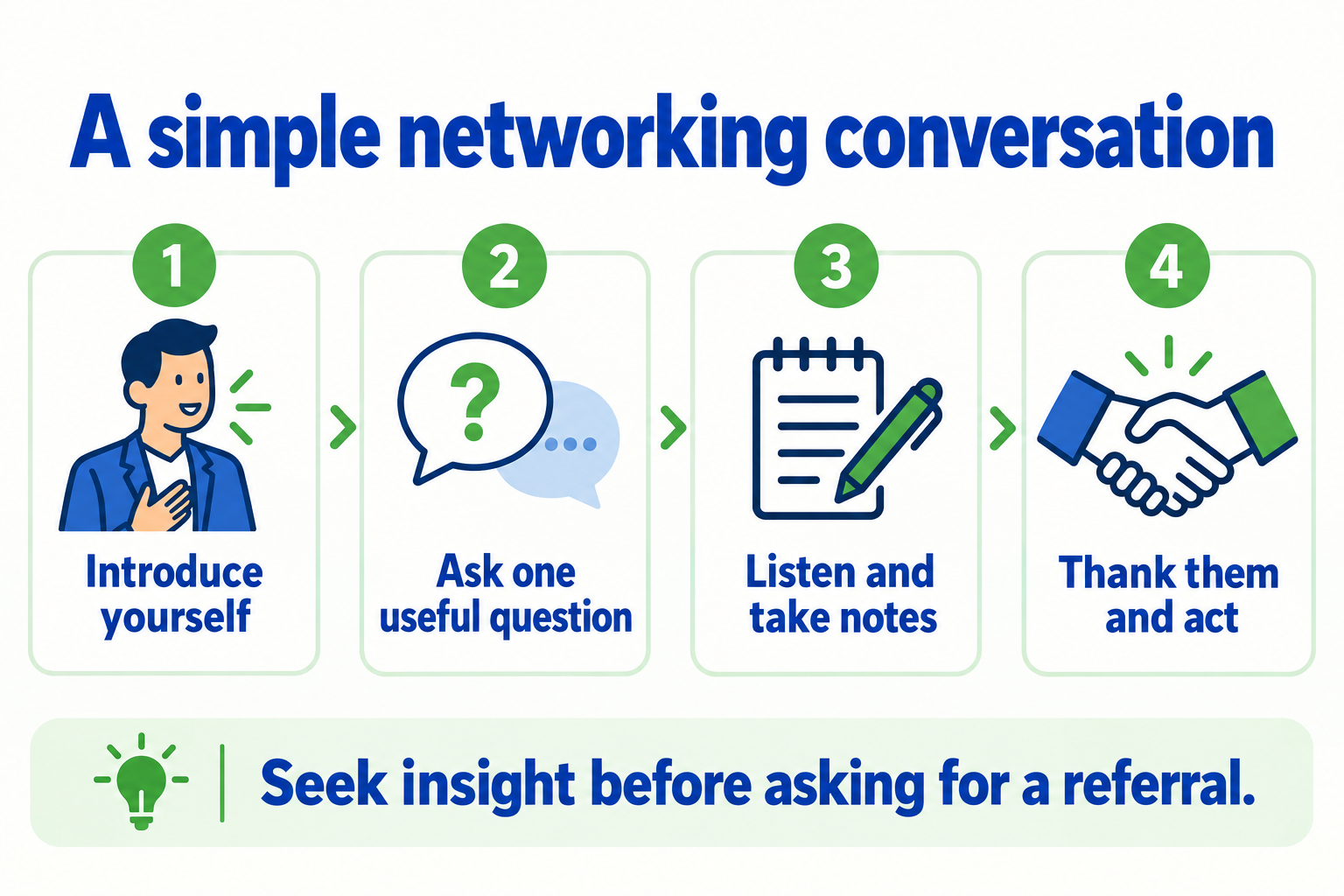
Review the person’s public background beforehand and prepare a two-sentence introduction. Confirm the agreed time and format. Begin by thanking them and explaining what you hope to understand.
Take brief notes without letting note-taking replace listening. Ordinary notes are usually enough; ask permission before recording. Keep your own answers concise so the other person has room to describe their experience.
Finish within the agreed time unless they offer to continue. Summarise one useful point and say what you plan to do with it. This demonstrates attention more clearly than exaggerated praise or a rushed request for a referral.
Follow Up with a Reason
Send a brief thank-you that mentions a specific insight. If you later act on the advice, a short update can be appropriate. For example, explain that you revised a project sample to show the task they described.
Do not message repeatedly just to remain visible. Give each follow-up a purpose and respect silence. One polite reminder may be reasonable, but repeated requests across several platforms can become intrusive.
If someone suggests a vacancy, use the official application route. If they offer a referral, ask what information would help them judge your suitability. Never assume that a friendly conversation gives permission to list the person as a referee.
Use Insights to Improve Your Applications
Translate what you learn into more relevant examples and better questions. If a conversation highlights coordination work, examine whether your application shows how you organise tasks. Treat one person’s experience as a perspective rather than a rule for the whole industry.
The fresh graduate cover letter guide explains how to connect evidence with the employer’s needs. Mention a contact only when appropriate and with permission where necessary. The letter should still establish your own suitability.
If a relevant contact asks for an introduction in video format, Greetsquare’s video resume option can provide that additional format. Keep the message focused on your skills and avoid unsolicited large attachments. Video is optional supporting material, not a substitute for a respectful request.
Make Networking Manageable If You Are Shy
Start with written outreach or small events built around a clear topic. Practise your introduction and one question beforehand. Set a modest aim, such as understanding one role better, instead of trying to meet everyone.
Reserved people can build strong professional relationships through preparation, listening and follow-through. You do not need to imitate a more outgoing personality. If an interaction feels awkward, choose one improvement for the next conversation and continue at a sustainable pace.
Take One Small Step This Week
Choose one person and write one question that their public profile does not already answer. Explain why their experience is relevant, then send a concise message through a suitable channel. Keep your request easy to decline.
Continue your applications and skill development while waiting. Whether the person responds or not, you have practised a useful professional habit. Over time, thoughtful conversations can improve both your understanding of work and the relationships supporting your search.
Frequently Asked Questions
How Do I Network If I Know Nobody in the Industry?
Start with alumni, career events and professional communities connected to the work. Explain why someone’s experience interests you and ask a specific question. Use appropriate contact channels and keep the request modest. You do not need an introduction for every conversation, but you should respect boundaries and non-response.
Is It Rude to Ask for a Referral?
Context matters. Give the person enough information to assess your suitability and make it easy to decline. A short conversation does not create an obligation. Ask whether they would be comfortable helping, and follow the employer’s official process rather than assuming personal contact replaces the application.
What Should I Say After a Networking Conversation?
Thank the person and identify one useful point you learned. If you later act on their advice, a brief update can be appropriate. Avoid frequent messages without a purpose. Reliable follow-through helps maintain a professional relationship without asking someone else to take responsibility for your job search.
Can Introverts Network Successfully?
Yes. Prepare a short introduction, ask focused questions and listen carefully. Written outreach and small conversations can be useful starting points. You do not have to speak constantly or entertain a group. Build a manageable habit around genuine professional interests and respectful follow-through.



