

A marketing manager job description outlines responsibility for understanding customers, planning marketing activity and evaluating its contribution to business goals. The role connects audience needs with positioning, channel choices, budgets and delivery. Depending on the employer, it may include direct reports, agency management or hands-on campaign execution.
Before applying, establish what the manager actually owns. A vacancy asking for brand planning, paid media, events and sales enablement may describe a broad generalist position; another may need deep expertise in customer retention. This guide helps you interpret those differences and prepare evidence that fits the work.
What Occupational Research Says About Marketing Management
The US Bureau of Labor Statistics projects 7% employment growth for marketing managers from 2025 to 2035. Its occupational profile includes market research, customer acquisition and retention, and collaboration with sales and product teams. These are US figures, not a forecast for Singapore. Source: BLS marketing managers profile.
For an applicant, the useful point is the breadth of the work. A portfolio of social posts alone cannot demonstrate every responsibility in a general marketing role. Match each example to the employer’s commercial objective, then explain which parts you controlled and which depended on other teams.
What a Marketing Manager Job Description Should Clarify
Start with the audience and business model. Selling enterprise software involves different buying groups and sales cycles from promoting a consumer subscription. Ask whether the role serves a single product, a country market, an industry segment or several business units.
Next, identify decision authority. Can you reallocate campaign spending, select agencies or change the messaging? A manager can be accountable for results without having unrestricted control over pricing, product availability or sales follow-up. Those boundaries help explain what a realistic target looks like.
Reporting lines also reveal scope. A marketing manager may report to a marketing director, head of growth or business leader. The wider marketing and sales leadership guide explains senior leadership responsibilities; this role guide focuses on translating agreed priorities into effective marketing work.
Core Responsibilities Across the Campaign Cycle
Understand the Audience and Define the Problem
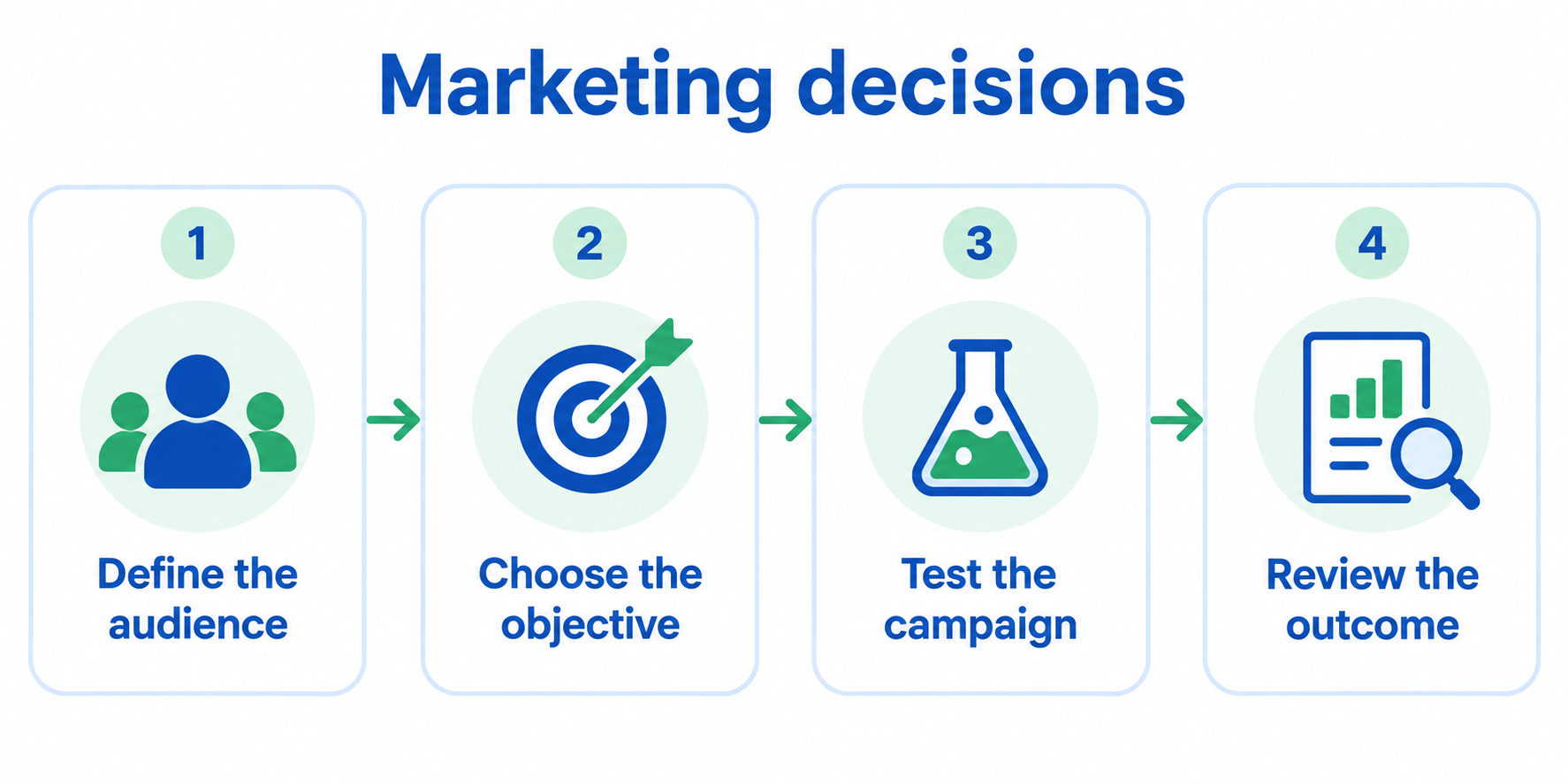
Good planning starts with a specific customer problem. The manager reviews research, customer conversations, campaign history and sales feedback to decide whom to reach and why the offer matters. They distinguish evidence from assumptions that still need testing.
For example, low enquiries might reflect weak targeting, unclear messaging or an unsuitable offer. Increasing advertising spend before diagnosing the cause can amplify the wrong activity. A useful campaign brief records the audience, desired action, main objection and evidence supporting the message.
Coordinate Delivery and Manage Resources
The manager turns the brief into a workable schedule, assigns responsibilities and checks dependencies. Creative production, landing pages, tracking and sales preparation need compatible deadlines. External agencies also need clear acceptance criteria and feedback that resolves issues rather than introducing endless revisions.
Budget ownership involves choices across competing needs. A campaign may require more research and fewer channels, especially when the team lacks reliable evidence. A defensible decision connects spending to the objective and states what would trigger a pause, adjustment or further investment.
Evaluate Results and Improve the Next Decision
Measurement should follow the objective. Awareness activity, lead generation and retention campaigns require different indicators. Impressions show exposure; qualified enquiries and retained customers address later stages of the customer journey. None automatically proves that marketing caused the entire business result.
The manager checks tracking quality, compares relevant periods and discusses findings with sales or customer success. A useful report separates observed results from explanations that remain uncertain. It ends with a decision, such as changing the audience definition or testing a clearer offer.
Skills Employers Need Beyond a List of Tools
Technical skills can include analytics, customer relationship management systems, spreadsheet analysis, content planning and campaign platforms. The exact tools depend on the position. Explain how you used a tool to answer a question instead of filling your resume with software names.
Commercial judgement matters just as much. You should be able to explain why an audience was worth pursuing, what a campaign cost and which result justified continued spending. When calculating a return, define the revenue period, cost basis and attribution assumptions so the number can be interpreted fairly.
Communication keeps delivery moving. A designer needs an actionable brief; a sales leader needs to understand lead quality; finance needs a budget rationale. Managing these conversations requires specific feedback, careful listening and a willingness to change an unsupported recommendation.
Qualifications, Experience and Management Scope
Employers may request a degree in marketing, business, communications or a related discipline. Relevant experience and demonstrable judgement remain central to assessing fit. Channel certifications can show familiarity with a platform, but they cannot establish that you can plan an integrated campaign or manage a difficult trade-off.
Read experience requirements alongside the responsibilities. A role with several direct reports, regional budgets and agency contracts demands different evidence from a position managing one campaign stream. Ask whether people management is essential or whether the title refers primarily to managing programmes.
If you are just entering the profession, the graduate marketing career guide covers starting routes. For a manager application, prioritise examples showing ownership of decisions, coordination and learning after delivery.
Build a Portfolio Around a Decision Trail
Choose one relevant campaign and organise it into five parts: business problem, audience evidence, decision, execution and result. Include your personal contribution at every stage. Keep confidential budgets and customer information out of the version you share publicly.
Consider a fictional campaign that generated many enquiries but few suitable sales conversations. A stronger case study would show how the manager reviewed enquiry reasons, tightened qualification language and agreed a handoff process with sales. It would also acknowledge that conversion depends on the offer and follow-up, not messaging alone.
Show the inconvenient evidence too. If one channel produced cheaper enquiries but poorer-fit customers, explain why the team reduced its allocation. That demonstrates judgement more clearly than presenting every metric as a success. Use real results when available and label illustrative numbers as illustrative.
Prepare for Role-Specific Interview Questions
Expect questions about prioritisation, disappointing results and collaboration. Prepare an example of a campaign you changed after new evidence emerged. Explain the information available at the time, the alternatives considered and the consequence of your choice.
You may also be asked how you would allocate a limited budget. Clarify the objective, audience and existing evidence before proposing channels. A structured response with stated assumptions is stronger than a confident spending plan built on missing information. Practise using the guide to answering tough interview questions.
Ask the employer how success will be evaluated after the first few months. Find out whether reliable baseline data already exists, who approves creative work and how marketing and sales resolve disagreements. These questions test whether the responsibilities and available resources fit together.
Turn Your Experience Into a Focused Application
Use the job roles overview to compare the level of ownership expected across functions. Then select two campaign examples that match this vacancy rather than sending every project you have completed.
If a video introduction is appropriate, explain one audience problem and one decision you made in plain language. The video resume guide can help you structure it. You can use Greetsquare’s jobseeker platform to present your experience alongside your written application.
Frequently Asked Questions
What Does a Marketing Manager Do Each Day?
A marketing manager may review campaign performance, refine a brief, coordinate an agency, discuss customer feedback with sales and plan upcoming activity. The balance depends on team size and specialisation. The consistent responsibility is connecting marketing decisions with a defined audience and a useful business objective.
Does a Marketing Manager Need to Manage Employees?
Not always. Some marketing managers lead direct reports, while others manage campaigns, agencies or a product category without formal people responsibility. Check whether the vacancy includes hiring, performance reviews and coaching. Ask the employer to distinguish team leadership from coordinating people who report elsewhere.
How Is a Marketing Manager Different From a Marketing Director?
A marketing manager commonly owns delivery and improvement within an agreed area. A director often sets broader priorities, allocates resources across teams and carries wider organisational accountability. Titles vary between employers, so compare budget authority, reporting lines and decision scope before assuming a fixed hierarchy.
What Should a Marketing Manager Portfolio Contain?
Include a small number of relevant cases showing the problem, audience, your decisions, delivery and results. Explain measurement limitations and distinguish your contribution from team work. Sanitised briefs, campaign examples and decision summaries are useful when you have permission to share them with prospective employers.



