
An HR manager job description defines responsibility for coordinating human resources processes and supporting managers throughout the employee lifecycle. The role can include hiring, onboarding, employee relations, performance management and HR administration. The exact mix depends on the organisation’s size, specialist support and local operating context.
An HR manager is not automatically the final decision-maker for every employee matter. Line managers, business leaders and specialist advisers may hold separate responsibilities. Before applying, clarify what you would own, what you would advise on and which matters require escalation.
What Occupational Research Says About HR Management
The US Bureau of Labor Statistics projects 6% growth in human resources manager employment from 2025 to 2035. Its profile describes work connecting management and employees, with responsibilities across staffing and organisational people processes. These are US occupational projections, not Singapore hiring forecasts. Source: BLS human resources managers profile.
For applicants, the practical message is to show how you turn a process into dependable support. Knowing policy language helps, but employers also need to understand how you gather facts, communicate options and ensure that agreed actions are completed. A list of annual HR activities reveals only part of that capability.
What an HR Manager Job Description Should Clarify
Check the employee population and business setting. Supporting a small office differs from coordinating HR across shifts, multiple sites or several countries. The volume and type of employee queries also influence how much time the role spends on operations, advice and planned improvements.
Identify the specialist support available. Recruitment, payroll, rewards, learning and employee relations may be separate teams or part of the manager’s remit. If payroll appears in the description, ask whether you prepare inputs, review exceptions, manage a provider or own the complete process.
Clarify reporting lines and authority. An HR manager may report to an HR director or business leader, with different approval boundaries. The existing HR director guide covers wider strategic leadership. This article focuses on managing people processes and day-to-day advisory responsibilities.
Core Responsibilities Across the Employee Lifecycle
Coordinate Recruitment and Onboarding
The manager helps hiring teams define the work, organise selection and maintain a consistent candidate process. Depending on the structure, they may work with recruiters rather than source every applicant themselves. A useful contribution is making the responsibilities and assessment criteria clear before interviews begin.
Onboarding requires coordination across the line manager, IT and other teams. New employees need access, role expectations and a clear point of contact. The HR manager tracks the process and identifies gaps rather than assuming that a completed induction checklist means someone is ready to work effectively.
Support Employee Matters and Manager Decisions
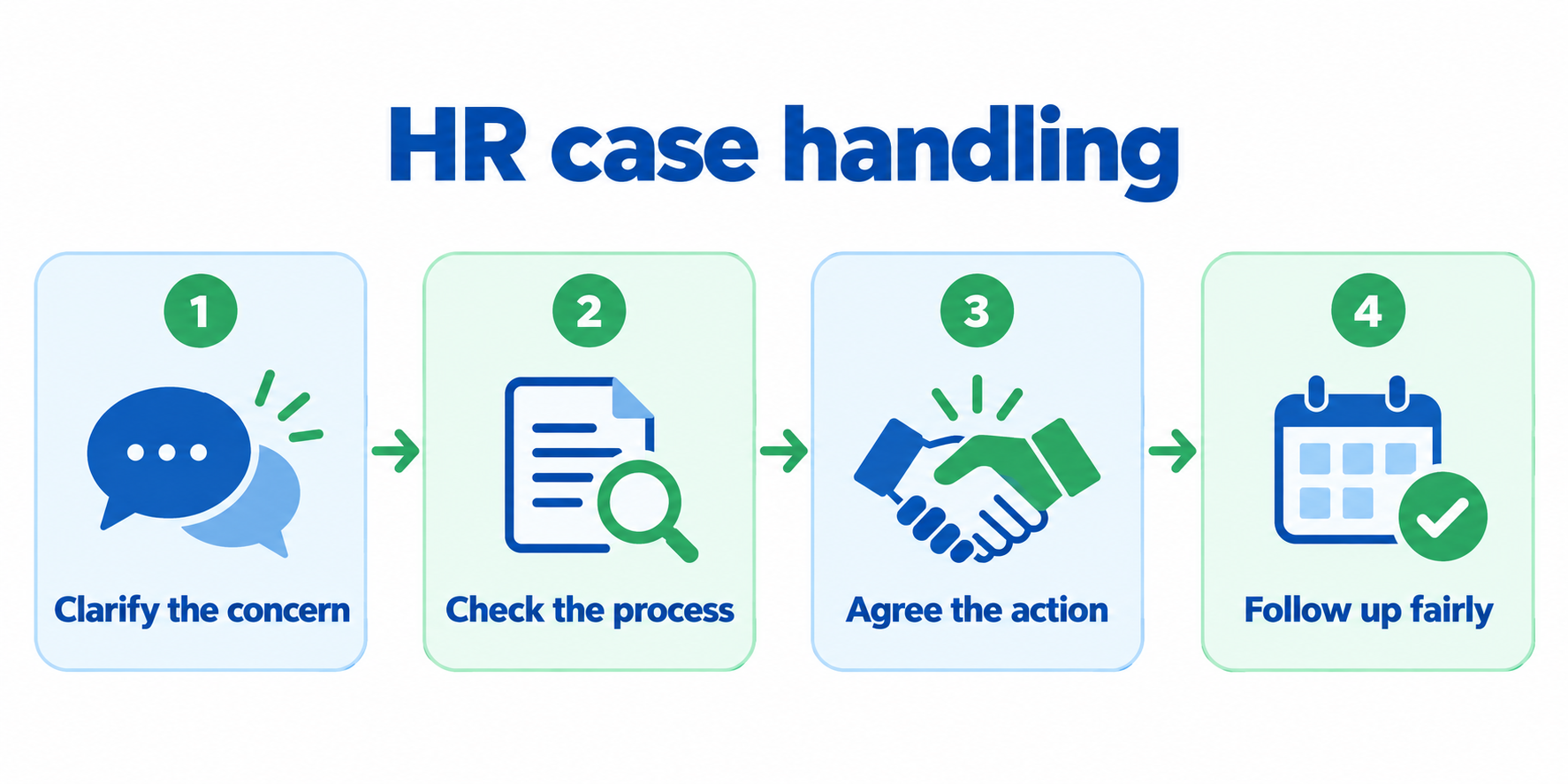
Employee questions can involve unclear expectations, working relationships or process concerns. The manager establishes the facts, checks the relevant process and helps the appropriate decision-maker consider the next step. Sensitive matters need careful documentation and suitable specialist input where required.
Good handling separates an allegation from a finding and a proposal from an approved action. It also makes follow-up responsibilities clear. The aim is a consistent, well-supported process, not a promise to deliver the outcome that the first person speaking to HR prefers.
Maintain Dependable HR Operations
Records, payroll inputs and employee changes require accurate information and defined review points. An HR manager may coordinate these activities directly or oversee specialists and providers. Errors can affect trust quickly, so exception handling matters as much as the routine workflow.
The manager also supports recurring cycles such as performance reviews, development planning and employee feedback. They explain the process, help managers use it and identify repeated problems. A cycle completed on time is useful, but the quality of the conversations and resulting actions also deserves attention.
Skills Employers Need From an HR Manager
Communication requires adapting the same process for different audiences without changing its meaning. An employee needs a clear explanation of the next step; a manager needs practical guidance; a leader may need a concise summary of unresolved issues. Careful listening prevents a quick response from addressing the wrong concern.
Judgement includes knowing when to escalate. The manager should recognise the limits of their authority and expertise, especially when a matter requires legal, specialist or senior review. Familiarity with the relevant local rules is part of role preparation, but an application should not claim expertise across jurisdictions without evidence.
Data literacy helps identify patterns in hiring, turnover, absence or process delays. Define the measure and the population before drawing conclusions. A small change in a small team may not support a broad explanation, and a dashboard should never expose individual information to people who do not need it.
Qualifications, Experience and Operating Context
Employers may request a degree, an HR qualification or relevant professional experience. Requirements depend on the role’s complexity and location. Practical examples should show the employee processes you supported, the level of independence you had and the specialists or leaders involved in decisions.
Experience in an HR generalist position can be relevant when it includes ownership and coordination. A specialist moving into a broader role should identify where their experience is strong and where they need support. Avoid claiming complete employee-lifecycle expertise based on work in only one function.
For compensation context, the Singapore HR salary guide covers a separate question. Compare its role level and data period with the vacancy rather than treating a title as a complete salary benchmark. This job description guide concentrates on responsibilities and hiring evidence.
Demonstrate Judgement Through an Anonymised Example
Choose an example that shows a problem, your process, the decision boundary and the follow-up. Remove names, medical details and other identifying information. You can still explain your reasoning without reproducing an employee file or revealing the substance of a confidential case.
Consider a fictional team reporting inconsistent onboarding. The HR manager maps the handoffs and finds that access requests are being raised only after each new employee arrives. They agree an earlier trigger with managers and IT, assign ownership and review whether the process works for subsequent starters.
This is useful evidence because it shows diagnosis and coordination rather than only administration. Explain what you personally changed and how you checked the result. If several teams contributed, name their roles in the improvement without taking credit for their work.
Prepare for HR Manager Interview Scenarios
Scenario questions often test whether you gather enough information before acting. Clarify who is involved, what is known, what process applies and who has decision authority. Avoid offering a definitive response to a sensitive case before the facts and local context are established.
Prepare examples of handling competing priorities, communicating an unpopular process and correcting an operational error. The guide to tough interview questions can help you organise a concise answer. Keep the focus on your judgement and actions rather than private details about employees.
Ask the employer how HR and line managers divide responsibility. Find out which processes are stable, which need improvement and where specialist advice comes from. These questions help you assess whether the role’s expectations are realistic for the team and resources available.
Build an Application That Shows Dependable Support
Use the job roles overview to compare levels of ownership, then select two examples that fit the vacancy. Connect your experience with the employer’s employee population, operating model and immediate priorities instead of repeating a generic HR skills list.
If you include a video introduction, explain one process improvement in clear, respectful language. The video resume guide offers a structure. You can present your experience through Greetsquare’s jobseeker platform alongside your resume and qualifications.
Frequently Asked Questions
What Are an HR Manager’s Main Responsibilities?
An HR manager coordinates people processes and advises managers on employee matters. Responsibilities may include recruitment, onboarding, HR operations, performance cycles and employee relations. The scope depends on company size and specialist support. Clarify which activities the manager owns directly and which they coordinate or support through others.
Is an HR Manager Responsible for Payroll?
Sometimes. An HR manager may prepare employee changes, check payroll inputs, review exceptions or coordinate a payroll provider. In other organisations, finance or a specialist team owns payroll. Ask who approves changes, runs calculations and resolves errors rather than assuming the job title implies complete payroll responsibility.
How Is an HR Manager Different From an HR Director?
An HR manager often oversees processes and advisory work for a defined employee population. An HR director usually holds wider responsibility for people strategy, resources and organisational priorities. The distinction varies by company, so compare reporting lines, decision authority and scope rather than assuming a universal title hierarchy.
What Should an HR Manager Discuss in an Interview?
Discuss relevant examples of process improvement, manager support, coordination and sound judgement. Explain what you did, who held decision authority and how you followed up. Protect confidentiality by removing identifying information. You can demonstrate effective handling of a situation without sharing private employee records or sensitive case details.



