

An IT director leads the technology services and capabilities a business needs to operate effectively. An IT director job description usually includes planning priorities, managing teams and suppliers, overseeing budgets and improving the reliability of systems used across the organisation.
The role requires technical understanding and business judgement. It is not simply a promotion into handling the hardest support ticket. This guide focuses on internal technology leadership, the decisions involved and the evidence candidates can use to demonstrate readiness.
What Occupational Guidance Says About IT Leadership
The US Bureau of Labor Statistics profile for computer and information systems managers describes responsibility for planning and directing computer-related activity. It also explains that duties vary by the size and structure of the organisation.
That makes the job description’s boundaries especially important. An IT director supporting office systems may have a different remit from one responsible for several sites and critical operational applications. Start with our job roles guide to connect the employer’s scope with the evidence needed in your application.
IT Director Job Description: Core Responsibilities
Translate Business Priorities Into Technology Decisions
The director works with business leaders to identify the services and changes that matter most. A request for new software may conceal a process problem, inconsistent data or unclear ownership. Understanding the underlying need helps avoid purchasing a tool that leaves the original problem unresolved.
A practical roadmap explains the sequence of work, dependencies and resource constraints. It should make room for maintenance and risk reduction alongside visible new features. Postponing essential renewal repeatedly can make future changes slower and more expensive, even when each individual delay appears convenient.
Maintain Reliable Services and Clear Ownership
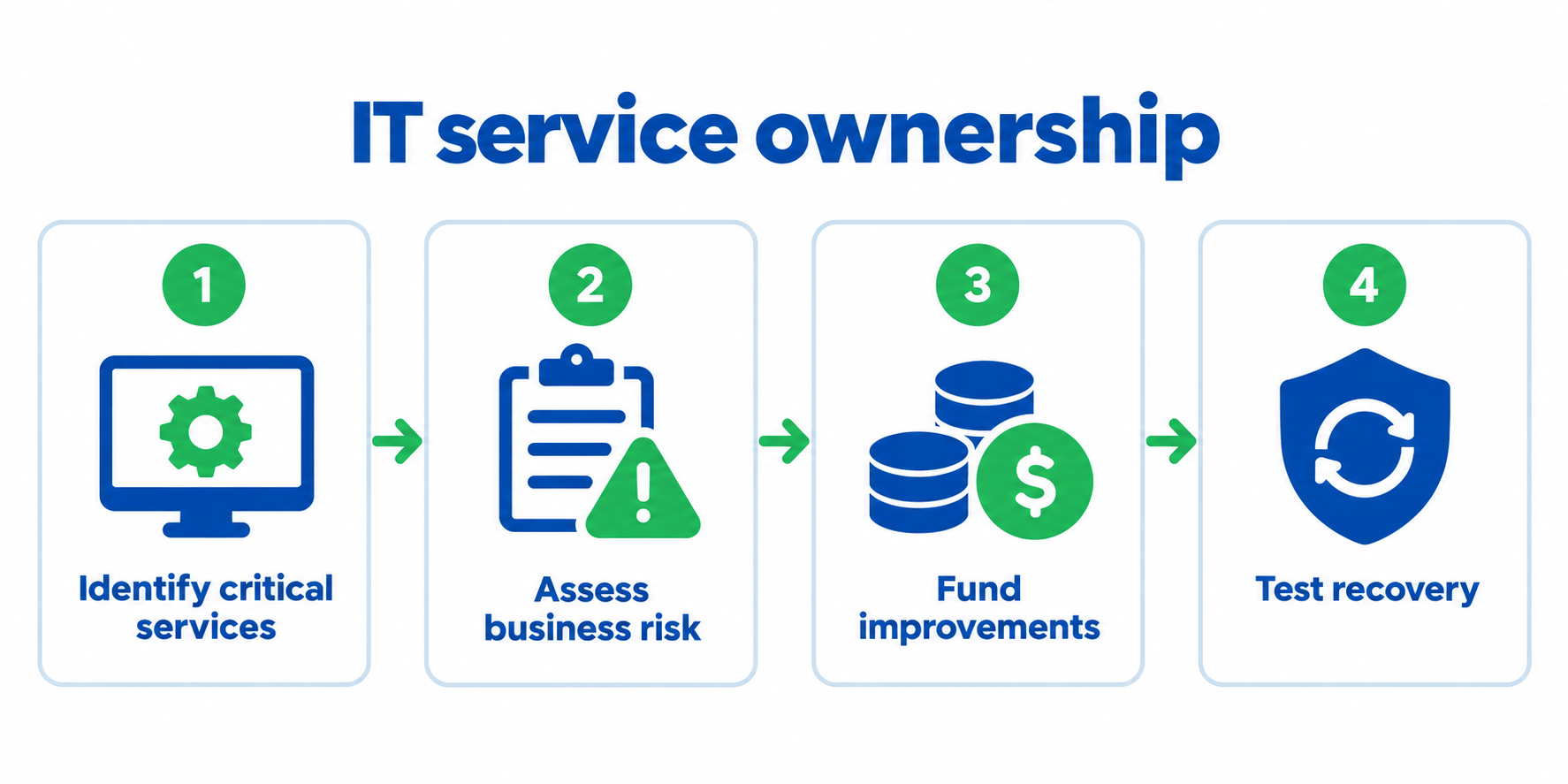
Service reliability starts with knowing which systems support important business activities and who is accountable for them. The director establishes expectations for support, maintenance, escalation and supplier performance. A service should not depend on undocumented knowledge held by one person.
Performance reporting needs business context. High average availability may conceal an outage during a critical trading or reporting period. The consequence of failure matters alongside its duration. Directors should use service reviews to agree improvements rather than simply circulate a dashboard of reassuring averages.
Oversee Risk and Recovery Readiness
The director works with security, risk and business owners to understand technology exposure and prioritise improvements. Depending on the organisation, specialist security leaders may own parts of this work. Clear accountability is essential when responsibilities span internal teams and external providers.
Recovery planning should connect technical arrangements with the business activity that must resume. A documented backup process is not the same as evidence that recovery works. Directors need to know whether tests have been completed, what gaps were found and who is responsible for addressing them.
Manage Budgets and Suppliers
Technology cost includes more than the initial licence or implementation fee. Support, integration, training, migration and eventual replacement can materially change the comparison between options. The director makes these assumptions visible when recommending investment or renewing a supplier arrangement.
Supplier management includes service expectations, escalation routes and the ability to change provider when necessary. A low price can become expensive if important knowledge or data cannot be transferred easily. Commercial reviews should involve the appropriate procurement, legal and business stakeholders.
Lead Teams and Deliver Change Responsibly
An IT director develops managers and specialists while balancing operational work with change. Team plans should account for support demand, leave, training and the effort required to maintain existing services. Scheduling every person at full capacity leaves little resilience when urgent work appears.
Change leadership includes communication with affected users and preparation for support after launch. A technically successful deployment can still fail if people cannot perform their work. The director ensures that ownership, training and service arrangements are clear before the project team moves on.
Skills and Qualifications Employers May Request
Technical Breadth and Investment Judgement
Relevant knowledge may span infrastructure, cloud services, business applications, integration and service management. The director does not need to be the deepest specialist in every area, but should ask useful questions and recognise when independent expertise is needed.
Commercial judgement involves comparing options against business needs, risk and total cost. In an interview, explain why you chose a particular approach and what would have changed your decision. Naming a technology without discussing its constraints gives the hiring team little evidence of leadership judgement.
Communication and Organisational Leadership
The director must explain technical consequences in language colleagues can use. That can mean describing the operational impact of delaying a system renewal or clarifying what a proposed service improvement will and will not achieve. Honest uncertainty is more useful than a promise the team cannot support.
Employers may ask for a relevant degree, substantial technology experience and prior leadership responsibility. Certifications can support specific areas of knowledge, but requirements vary. Show how you led people, prioritised investment and improved service outcomes rather than presenting credentials as a substitute for experience.
IT Director, CIO, CTO and Project Manager Differences
An IT director often reports to a CIO, COO, CFO or general manager, depending on the organisation. A CIO may have wider enterprise information and technology accountability. A CTO may focus more on product technology or engineering, although these responsibilities can overlap substantially.
Our CTO role guide covers that related executive path. For an IT director vacancy, look closely at who owns internal services, investment decisions and the capability of the team supporting the business.
An IT project manager coordinates a defined initiative, while the director normally remains accountable for the broader portfolio and services after individual projects finish. Ask who owns business adoption, operational support and benefits review after handover.
A Realistic Example of IT Leadership Judgement
Consider a fictional company deciding whether to replace an unreliable finance system immediately or stabilise it while preparing a phased migration. The director first clarifies the business impact, failure history, supplier support and dependencies. Choosing a replacement solely because it is newer would leave important questions unanswered.
The comparison should include disruption, data migration, staff training and the ability to return to a workable state if a stage fails. A phased approach may reduce some risks while extending the period of maintaining two systems. The right recommendation depends on the evidence and constraints, not a universal preference for faster or slower change.
How to Present Your Experience Convincingly
Prepare examples covering service improvement, investment judgement and team leadership. State the scale you owned, the options considered and the outcome you can verify. When discussing reliability, define the service and measurement period rather than using an impressive percentage without context.
Use our tough interview questions guide to practise explaining a difficult trade-off. A strong answer can show how you challenged an assumption, involved the right specialists and revised the plan when new evidence emerged.
For a short introduction, follow the video resume guide. Explain one technology decision in business terms. Avoid displaying internal system diagrams, access details or confidential incident information in public application material.
Build an Application Around the Employer’s Technology Needs
Identify whether the vacancy is primarily about stabilising services, supporting growth, modernising systems or strengthening management. Match your evidence to those needs and ask about decision rights, team capacity and existing commitments. These questions help establish whether the mandate is achievable.
Use Greetsquare for jobseekers to introduce your leadership approach and support it with a focused CV. The strongest message connects dependable technology services with the work people need to accomplish across the business.
Frequently Asked Questions
Is an IT Director the Same as a CTO?
Not necessarily. An IT director often focuses on internal systems and service delivery, while a CTO may lead product technology or engineering strategy. Organisations divide these responsibilities differently, and smaller companies may combine them. Check the actual mandate, reporting line and team structure before comparing the titles.
Does an IT Director Need to Write Code?
Some roles value hands-on development experience, but coding is not a universal daily requirement. Directors generally need enough technical understanding to evaluate options, question assumptions and lead specialists. The required depth depends on whether the remit centres on infrastructure, business applications, software delivery or a combination of services.
What Should an IT Director Include on a CV?
Include the scope of services, teams, budgets and changes you owned, supported by examples of improved reliability, effective investment or stronger delivery capability. Explain measurement periods and your contribution clearly. Avoid listing technologies without showing the business problem they addressed or the judgement involved in selecting them.
Who Is Responsible for Security in an IT Director Role?
Responsibility depends on the organisation. An IT director may own some operational controls while a security leader sets specialist priorities or governance. The job description should clarify accountability and collaboration. Ask how risks are escalated, who approves decisions and how responsibilities are divided between internal teams and suppliers.



