

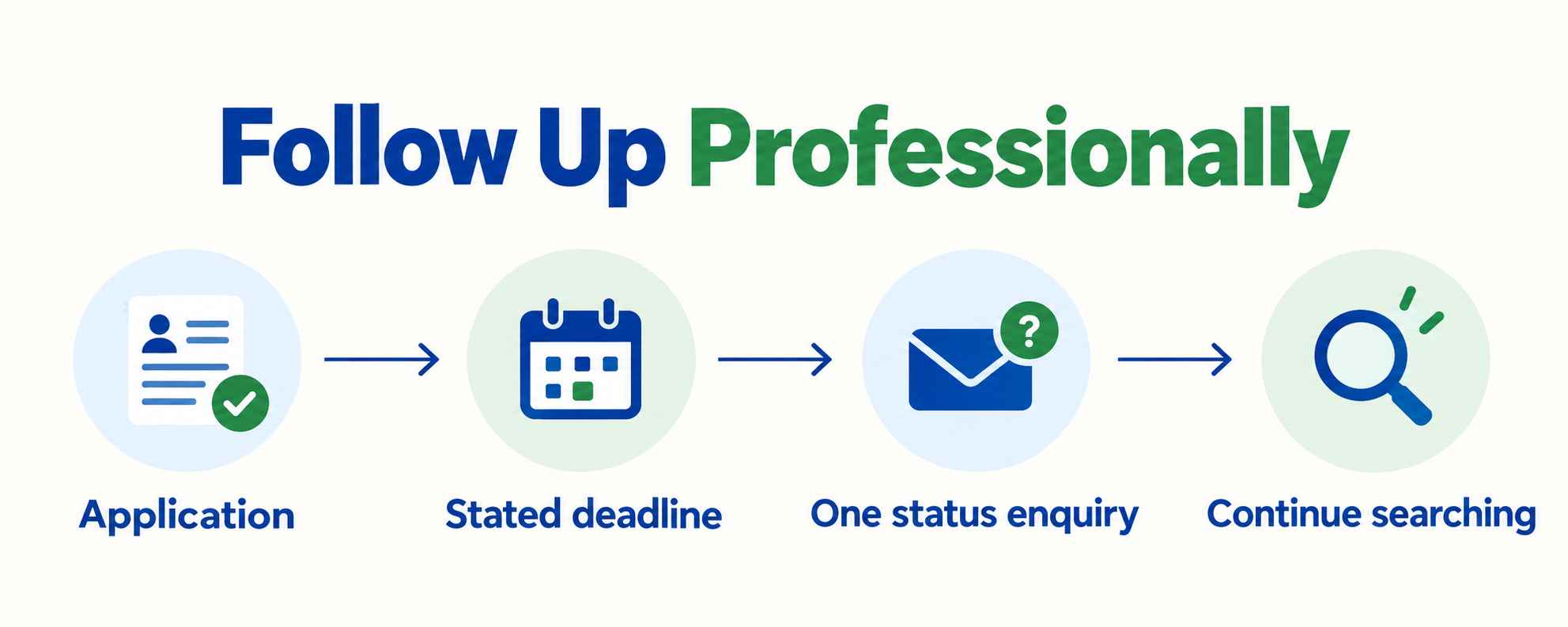
To follow up on a job application or interview, contact the appropriate person after the stated timeline has passed, identify the role and ask for a brief update. If no timeline was given, allow a reasonable interval before enquiring. Keep the message professional and continue with other opportunities while waiting.
A follow-up is a request for information, not a demand for a decision. Its value comes from clarity and timing rather than repeated reminders.
What Interview Guidance Recommends
The US Department of Labor’s Interview Skills participant guide includes agreeing a follow-up timeline when closing an interview. This is useful process guidance, not a universal rule about how many days every employer needs.
Asking about next steps before the conversation ends reduces guesswork later. Note who will contact you, what stage comes next and whether the employer welcomes questions by email.
Choose the Right Reason to Follow Up
An application acknowledgement, interview thank-you and status enquiry serve different purposes. Check that your message has one clear purpose before writing it. Combining gratitude, a complaint and a negotiation request can make it difficult to answer.
After submitting, you may need to confirm receipt if the process gives you no confirmation and there is a suitable contact. After an interview, you may want to thank the interviewer. After a promised date passes, you may reasonably ask about progress.
If the wider search is stalling, consult the job search reset guide. Following up more often will not solve every targeting or application problem.
Decide When to Follow Up on a Job Application
Follow explicit instructions first. An advert may say that only shortlisted applicants will be contacted or that enquiries are not accepted. An application portal may already show the information you need.
Where no schedule is provided, waiting roughly one to two weeks can be a practical starting point for an application enquiry, depending on the closing date and context. This is an editorial guideline, not a requirement employers must follow.
If the advert has a future closing date, the employer may wait until then to review candidates. If a recruiter has given you a specific date, use that information instead of applying a generic number of days.
Use the Established Contact Channel
Reply in the existing email thread when it contains the relevant conversation. This gives the recruiter context and avoids creating several disconnected messages. Include the vacancy reference if it helps identify the application.
Use a contact listed for recruitment or the person who arranged your interview. Do not search for unrelated employees’ personal accounts merely because the official route is quiet. Contacting several people simultaneously can create confusion rather than improve your chances.
If a portal is the only available channel, use its status information and instructions. You may not have a practical way to obtain an individual response. Accept that limitation while continuing your search.
Write a Concise Application Enquiry
Use a subject that identifies the role. In the message, state when you applied, confirm your interest and ask whether there is an update or any further information required. You do not need to restate your whole resume.
Example template: “Hello [Name], I applied for the [Role], reference [Number], on [Date]. I remain interested in the position, particularly its focus on [Relevant Responsibility]. Could you let me know whether there is an update on the process or any further information I can provide? Thank you, [Name].”
Replace every placeholder and remove details that do not apply. Keep the tone neutral. Avoid suggesting that the employer owes you an interview because you invested time in the application.
Separate the Interview Thank-You from Status Chasing
A brief thank-you after an interview can acknowledge the conversation and confirm your interest. Mention one useful topic discussed, then connect it to relevant experience. Send it promptly when a contact route exists and the process permits it.
Example: “Thank you for discussing the customer operations role today. I appreciated learning how the team handles delivery exceptions. The coordination work we discussed is closely related to my experience maintaining order updates across teams. I remain interested and look forward to hearing about the next stage.”
This is not the moment to insist on a decision date that was never promised. If the interviewer already supplied a timeline, record it and wait until it has passed before requesting a status update.
Follow Up After a Missed Timeline
Refer to the agreed schedule without sounding accusatory. For example: “You mentioned that the next-stage update was expected this week. I am checking whether the timeline has changed and whether you need anything further from me.”
Hiring schedules can move because of availability, approvals or changes in the role. An update may be possible, but the recruiter may not yet have a firm answer. Ask a question that allows them to explain that uncertainty.
If you receive a new date, use it. If you receive no answer, one unanswered status enquiry is a reasonable default before redirecting your attention. It is a workload boundary for you, not a universal rule that forbids later contact when circumstances change.
Handle Another Offer Honestly
If you have a genuine offer deadline, tell the recruiter the relevant date and ask whether they can share their expected timeline. Do not invent another offer to create pressure. Be clear that you understand they may not be able to accelerate their process.
Example: “I remain interested in your role and wanted to let you know that I have another offer requiring a response by [Date]. Are you able to share whether your process is likely to reach a decision before then?”
This provides useful information without making a threat. You still need to decide what to do by your real deadline based on the offers and facts available to you.
Add Material Only When It Helps
Send requested information promptly and identify it clearly. A short correction to an important factual error may also be appropriate. Avoid attaching several new documents simply to give yourself a reason to contact the recruiter again.
If an employer invites an introduction, Greetsquare’s video resume option can provide an additional way to explain relevant work. An unsolicited video should not replace a concise status enquiry or disregard the employer’s submission instructions.
Know When to Move On
After an unanswered enquiry, record the date and return to other suitable applications. Do not suspend your search because a conversation felt positive. Interest, scheduling and a confirmed offer are different stages.
The guide to why job applications receive no reply explains why silence does not reveal a single cause. You can review your own process without repeatedly chasing an explanation the employer may never provide.
Make Your Next Follow-Up Useful
Check the last conversation, the agreed date and the correct contact. Write one short message with the role, context and a clear question. Proofread the names and remove any frustration that does not help the recipient answer.
Then send it through the agreed channel and continue with your planned search activity. A professional follow-up supports a hiring conversation; it should not become the centre of your entire job search.
Frequently Asked Questions
How Soon Should I Follow Up After Applying?
Use the employer’s stated timeline and contact instructions. If none are provided, roughly one to two weeks can be a practical starting point, adjusted for the closing date and context. Check the portal first and continue applying elsewhere. No single waiting period fits every organisation or recruitment process.
Should I Send a Thank-You After Every Interview?
A short thank-you can be appropriate when you have a suitable contact and the process allows it. Mention something specific from the conversation and confirm your interest. It is separate from a status enquiry and does not guarantee progress. Follow any employer instructions that limit direct contact with interviewers.
How Many Times Should I Follow Up?
One unanswered status enquiry is a useful default before redirecting your effort. Further contact can be reasonable if the employer gives a new date, requests information or your circumstances materially change. Avoid repeated messages with no new purpose, and do not contact several employees simply because one person has not replied.
What If I Have Another Offer Deadline?
Tell the recruiter the genuine deadline and ask whether they can share or adjust their expected timeline. Do not invent an offer or imply a commitment you have not made. They may be unable to accelerate the process, so make your decision using the confirmed options available by your deadline.



