

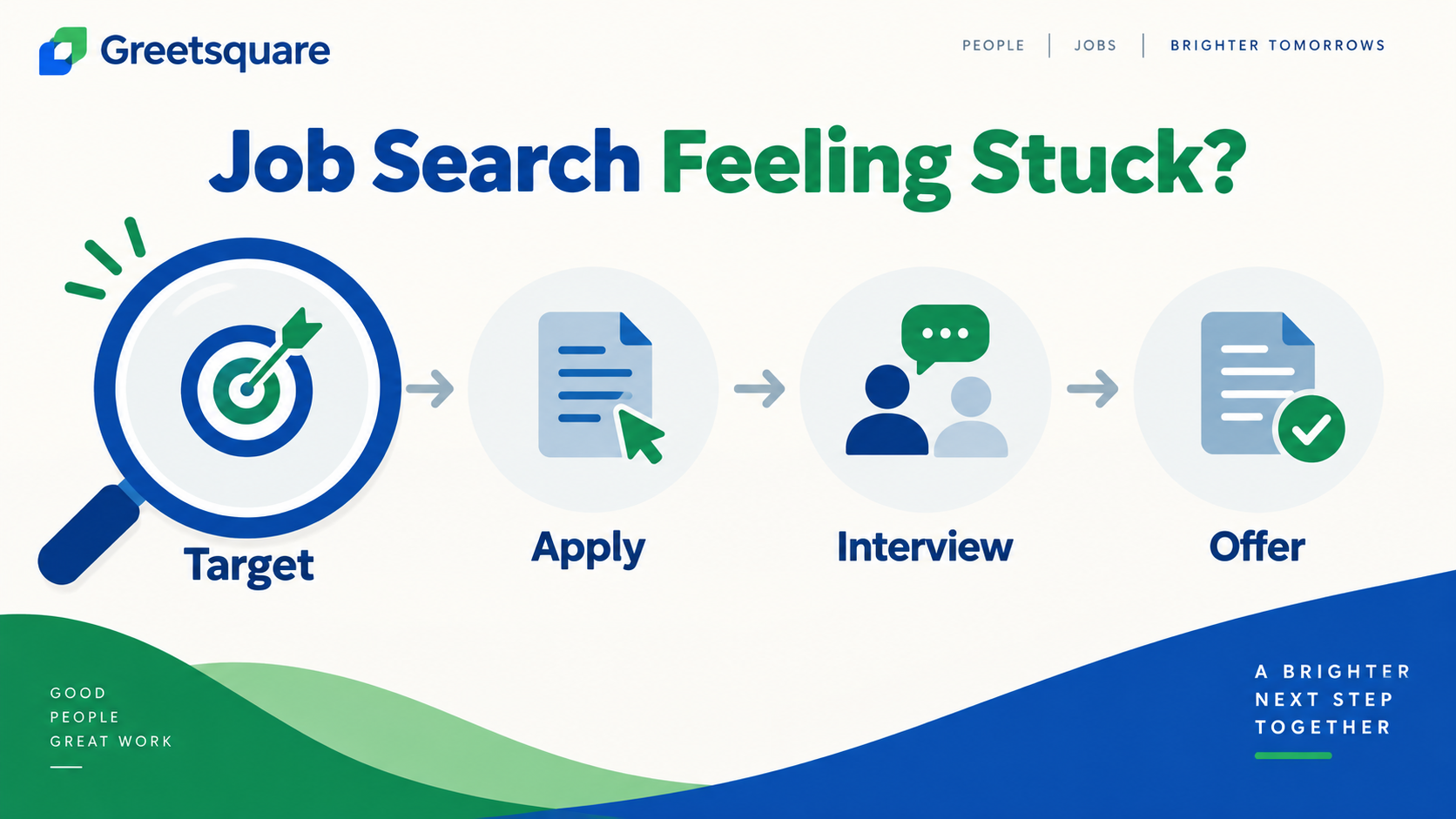
If you are wondering how to job search when you feel stuck, start by identifying where progress stops: finding suitable vacancies, getting responses, passing interviews or reaching an acceptable offer. Change the part of your process connected to that stage. Sending more applications is useful only when those applications reach plausible opportunities and show relevant evidence.
A stalled search can make every decision feel urgent. The practical response is to make the problem smaller. You need a useful diagnosis, a manageable experiment and a date to review what happened.
What Singapore Vacancy Data Can Tell You
MOM’s Job Vacancies 2025 infographic reports that the share of vacancies unfilled for at least six months fell from 19.4% in 2024 to 17.1% in 2025. These are vacancy measures, not an individual applicant’s probability of receiving an offer.
The distinction matters. Available jobs and a difficult personal search can exist together. Your occupation, experience, location, working arrangements and employer requirements determine which opportunities are actually relevant to you.
Diagnose Your Job Search When You Feel Stuck
Look at a recent group of applications to similar roles. Record the job, essential requirements, date, document version and furthest confirmed stage. Separate an automated acknowledgement from a recruiter conversation. Silence is an unknown outcome until you receive more information.
If you find few suitable vacancies, reconsider your search terms and adjacent roles. If applications produce no conversations, inspect role fit and evidence. If conversations regularly stop after interviews, practise explaining decisions and results. If offers are unsuitable, clarify your requirements earlier.
Our broader job search survival guide helps you connect this diagnosis to the rest of your search. Keep the first review focused on the earliest stage that repeatedly breaks down.
Improve Applications Before Increasing Volume
Investigate Unanswered Applications
A missing response does not prove that software rejected you. The vacancy may have changed, the employer may still be reviewing, or another applicant may provide stronger evidence. Read why applicants never hear back to separate observable facts from explanations you cannot verify.
Check simple failures first: incorrect contact details, unfinished forms, missing attachments and requirements you overlooked. Then ask a trusted reader to identify your fit from the actual document, without your verbal explanation.
Make Your Resume Readable and Relevant
Use the employer’s accepted file type and inspect any fields populated from your resume. The ATS resume guide explains parsing, formatting and why keyword tricks are unreliable. A readable document still needs convincing content.
Create a bank of accurate examples, then select the ones that match the vacancy. Our fast resume tailoring process helps you change emphasis without rewriting your history or inventing skills.
Give Employers Something Specific to Assess
For a customer operations role, a short explanation of how you resolved a recurring enquiry may be stronger than another claim about communication. For analysis work, a sanitised sample can show your reasoning. See how to stand out from other applicants for choosing evidence that fits the decision being made.
Spend Effort on Credible Opportunities
Repeated advertisements deserve a check, not an accusation. Employers sometimes recruit continuously or advertise in several places. The guide to ghost jobs and warning signs explains how to assess uncertainty before investing hours in bespoke work.
Confirm the organisation, vacancy reference and application route. Where a contact is provided, ask whether the position is actively recruiting and what the next step involves. Give lower priority to unclear opportunities while continuing with stronger ones.
Follow-up should have a purpose: confirming receipt, checking a missed timeline or sharing requested information. Use the job application follow-up guide to write a concise message and decide when further chasing is unlikely to help.
Build a Routine You Can Sustain
Divide your week into finding opportunities, preparing applications, making relevant contacts and practising interviews. Reserve a short review period to decide what changes next. The guide to staying consistent during a long job search offers a routine that can contract when your energy or available time falls.
For example, one applicant might spend two focused sessions on suitable vacancies, one on tailoring and one on practice. Another might need smaller sessions around caregiving or shift work. The example is a planning aid, not a required workload or a promise of results.
Judge your process by completed, useful actions as well as employer responses. You control whether you checked the application and practised an answer. You do not control the employer’s hiring schedule.
Address Your Situation Clearly
An employment gap needs a brief, truthful explanation and a clear account of your current readiness. Our employment gap guide shows how to provide context without disclosing unnecessary personal details or pretending every break was a business venture.
If you are currently working, plan around your responsibilities and use personal contact details. The guide to job searching while employed covers scheduling, discretion and managing conversations about availability.
Neither situation requires an apology. Explain the relevant facts, then return to what the role requires and the evidence you can provide.
Turn Visibility into Better Conversations
Your profile should help a reader understand the work you do and the work you want next. The LinkedIn job search guide connects profile clarity, relevant outreach and follow-through. Posting frequently without a clear target can create activity without useful conversations.
Where the employer accepts additional material, Greetsquare’s video resume option can support a brief introduction or explanation of a project. Keep the required written application complete. A video cannot guarantee attention or compensate for missing essential qualifications.
Prepare for the Stages After a Reply
Do not wait for an interview invitation to build a few examples. Use the tough interview questions guide to practise describing your contribution, judgement and learning. Record yourself if hearing your answer helps you notice missing context.
If you reach an offer, compare responsibilities, guaranteed pay, conditions and development opportunities. Our job offer negotiation guide helps you prepare a reasoned request rather than reacting to the first number alone.
Choose Your Next Useful Action
Open one recent application and identify its weakest link. Perhaps the role was poorly matched, the strongest example was buried, or your interview answer never explained the result. Make one specific correction and use it in the next suitable opportunity.
Review comparable applications after employers have had a reasonable chance to respond. Keep what improves clarity, reconsider what does not, and avoid treating a single result as proof that your entire strategy works or fails.
Frequently Asked Questions
Why Is My Job Search Not Working?
A search can stall because of role mismatch, unclear evidence, application problems, interview performance or employer decisions outside your control. Identify the stage where progress repeatedly stops. Review comparable opportunities and the documents you actually submitted before assuming that more applications or a new template will solve it.
How Many Jobs Should I Apply for Each Day?
There is no useful universal daily target. Choose a workload that lets you identify suitable roles, tailor important evidence and complete applications accurately. A smaller number of well-matched opportunities may deserve more attention than numerous weak matches. Review the quality and stage of your applications alongside their quantity.
Should I Change Careers If I Cannot Find a Job?
Not automatically. First check whether your target roles, evidence and search channels are appropriate. Explore adjacent occupations and speak with people doing that work before committing to a larger change. Compare entry requirements, practical constraints and your interest rather than using a difficult month as the only reason.
Can a Video Resume Help a Stalled Search?
A video may help explain a relevant example when an employer accepts it and communication is useful to assess. It is supporting material, not a guaranteed route to an interview. Follow application instructions, keep it concise and ensure your written resume still contains the information the employer requires.



