

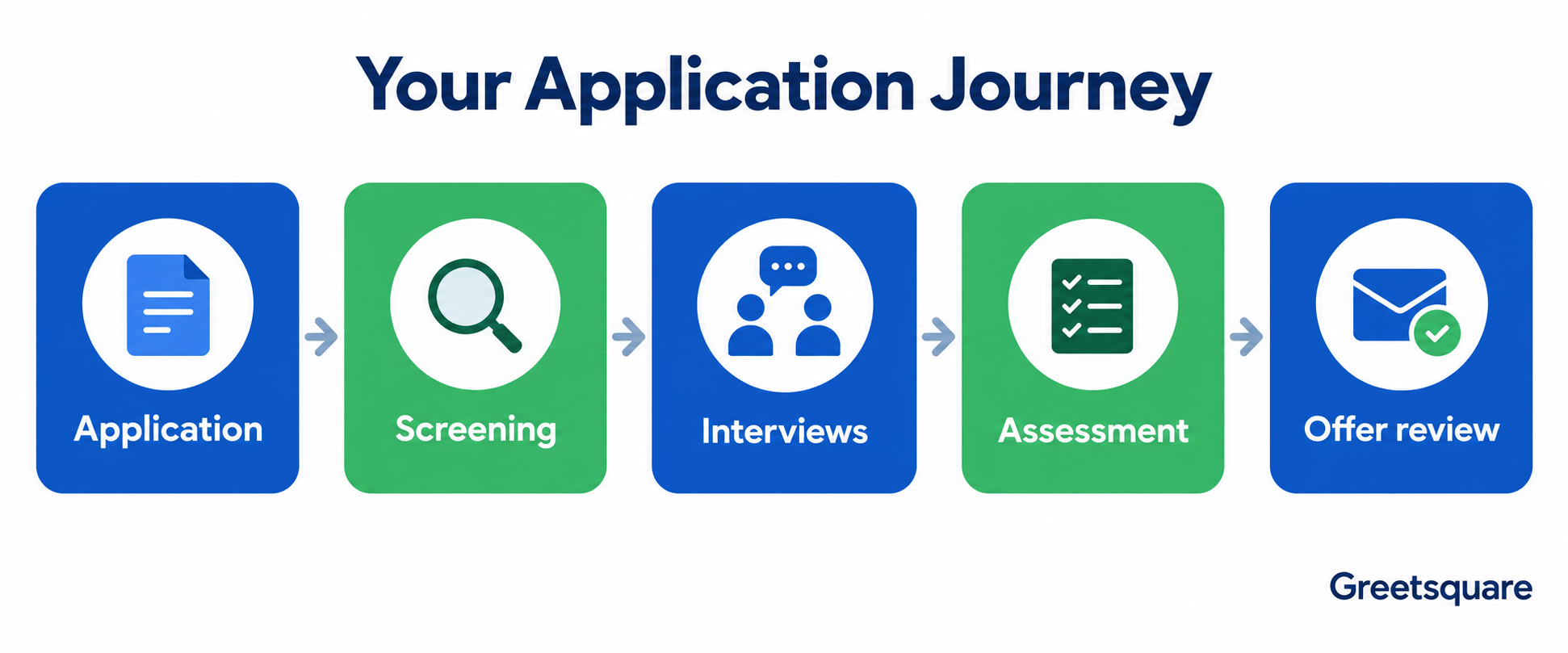
How does the interview and application process work? A typical process may include an application, initial screening, one or more interviews, an assessment and an offer review. Employers can combine, repeat or omit stages. This guide explains what each stage is for, what you can prepare and which questions help you understand the next step.
What Fair Recruitment Guidance Says About the Process
TAFEP’s Tripartite Standards describe recruitment practices using relevant, objective selection criteria and consistent assessment. This supports preparing evidence of the work the employer needs. It does not mean every employer follows an identical timetable or that completing one stage guarantees advancement.
Think of the process as a series of opportunities to clarify fit. The employer needs evidence of your ability, and you need information about the responsibilities and working conditions. Your preparation should serve both purposes, rather than concentrate only on making a favourable first impression.
Stage 1: Understand the Vacancy and Prepare the Application
Read the responsibilities, essential requirements, location and application instructions. Check whether you can support the main requirements with genuine examples. A similar job title can describe different work across employers, so inspect the scope before tailoring your CV.
Prepare the requested documents and make the connection between your experience and the role easy to follow. Use accurate employment dates, qualifications and responsibilities. If you lack a requirement, do not hide the gap with broad keywords. Decide whether the vacancy allows related experience or whether a different role better matches your readiness.
Greetsquare’s guide to tailoring your resume for each job covers this preparation in detail. Keep a record of the vacancy and the submitted version so you can refer to the same information when a recruiter contacts you.
Stage 2: Initial Screening
Screening may involve reviewing documents, checking eligibility or holding a short conversation. A recruiter may clarify availability, role expectations or relevant experience. The method varies, and a delayed response does not identify the reason for the delay.
Be ready to give a concise explanation of your background and interest in the role. Have the vacancy, CV and basic questions available. Confirm the name of the organisation and the position before sharing information. If a request is unclear, ask what is needed and how it relates to the application.
Keep the Written Submission Complete
A video introduction can supplement the application if accepted, but it should not replace the requested CV or structured fields. The resume screening guide explains practical document considerations. The video resume guide explains where an optional recording can fit without assuming every employer uses it.
Stage 3: Interviews
Interviews can be conducted by a recruiter, hiring manager, panel or prospective colleagues. Different conversations may explore different aspects of the role. Ask who you will meet and whether the interview has a particular format, so you can prepare appropriately.
Prepare a small set of real examples linked to the responsibilities. For each, understand the context, your action and the outcome or learning. Do not memorise a generic answer for every question. Listen to the question and choose the evidence that answers it. Clarify the question if an important detail is ambiguous.
| Stage | Preparation | Useful Question |
|---|---|---|
| Application | Tailored CV and requested documents | What must be submitted? |
| Screening | Concise role-relevant explanation | What are the next stages? |
| Interview | Genuine examples and questions | Which responsibilities matter most? |
| Assessment | Instructions, tools and time planning | What conditions and resources are permitted? |
| Offer review | Written terms and clarification points | What remains conditional or undecided? |
Use the tough interview questions guide for answer preparation. If the interview is online, check the video interview guide for the technology and environment. Those resources address specific tasks within the wider process described here.
Stage 4: Assessments and Work Samples
An employer may request a case study, technical exercise, presentation or other assessment. The task should be understood before you start. Confirm the deadline, expected output, permitted tools and whether collaboration or outside assistance is allowed. Follow those conditions, including any rules about AI use.
Plan your time and make your reasoning visible where the instructions require it. If you make an assumption, label it. A finished answer that hides uncertain inputs may be less useful than a clear explanation of the decision and its limits. Do not share confidential material from a previous employer to support your response.
Ask About Scope Before a Large Task
If the brief is vague or substantial, ask how much time the employer expects and what will be assessed. Clarify whether the task uses hypothetical material and how your submission will be handled. These questions help you decide how to approach the work and whether the process provides enough information for you to continue.
Stage 5: References and Verification
Some employers request references or verify qualifications and employment details. Timing varies, and checks may occur before or after an offer. Ask what information is required and whether you should notify the people providing references. Give accurate details through the requested, appropriate channel.
Do not assume that a request for references means the job is secured. Keep communication clear and track outstanding requirements. If you need to correct an error in your application, explain it promptly and accurately. Avoid altering documents or asking someone to confirm work that they did not observe.
Stage 6: Review the Offer
Read the written offer and clarify the role, reporting line, pay structure, benefits, location, start date and any stated conditions. Check how variable pay is described instead of treating every headline amount as guaranteed. Identify unanswered questions before making a commitment.
This is a practical review checklist, not legal advice about a particular contract. For a negotiation conversation, use the job offer negotiation guide. If a clause or obligation needs specialist interpretation, seek appropriate advice rather than relying on a general hiring article to decide its meaning.
Manage Timing and Follow-Ups
Ask when the employer expects to update you and which contact channel to use. Record the next step after each conversation. If the stated timing passes, a concise follow-up can ask whether there is an update and whether anything further is needed. Repeated messages rarely add useful information.
The application and interview follow-up guide provides wording and timing considerations. Continue other suitable applications while waiting. Silence, a positive conversation or an informal comment should not be treated as a confirmed offer.
Prepare for the Next Stage
Start with the stage you are actually facing. Check its instructions, gather the relevant evidence and write down your questions. Keep the application version, correspondence and next steps together. A simple record makes it easier to prepare consistently and to evaluate the opportunity as the employer provides more detail.
For applications that accept a video introduction, explore Greetsquare’s job-seeker video tools. Use the recording alongside the required application materials and follow the employer’s instructions for each stage.
Frequently Asked Questions
How Many Interviews Should I Expect?
There is no universal number. Employers may use one conversation, several interviews or a panel, depending on the role and process. Ask the recruiter about the planned stages and who you will meet. Use that information to prepare, while recognising that the sequence can change as the employer evaluates candidates.
Does a Reference Check Mean I Have the Job?
Not necessarily. Reference and verification checks can occur at different points, and other conditions may remain outstanding. Ask what stage you have reached and what happens next. Continue treating the opportunity as unconfirmed until the employer communicates an offer and you understand its written terms and any stated conditions.
Should I Send a Video Resume with Every Application?
Follow the employer’s instructions first. A video may supplement an application when accepted, but it should not replace a required CV or structured information. If the channel does not allow a recording, submit the requested materials. Keep any video relevant, accessible and consistent with the written account of your experience.
What Should I Ask Before Completing a Hiring Assessment?
Clarify the deadline, expected output, time commitment, permitted resources and how the task is assessed. Ask about unclear assumptions before proceeding. Follow rules on collaboration and AI assistance, and avoid using confidential material. Understanding the task helps you prepare a relevant submission and decide whether the scope is reasonable.



