
To use LinkedIn to get hired, build a profile that communicates your relevant experience, find suitable vacancies and start focused conversations with appropriate people. Follow through with tailored applications and interview preparation. LinkedIn can support discovery and contact, but no profile setting, posting schedule or connection count guarantees an offer.
The platform is most useful when it supports a clear job target. Without that target, it is easy to spend hours improving visibility while remaining unclear about which employers and roles you want to reach.
What LinkedIn’s Own Guidance Explains
LinkedIn’s Open to Work documentation explains that specifying desired roles and locations can help a profile appear in relevant recruiter searches. It also distinguishes visibility options, including a recruiters-only setting that does not guarantee complete privacy.
These are product capabilities, not a promise that a recruiter will contact you. Treat them as part of a wider process that includes credible evidence, suitable vacancies and clear communication.
Define Your Target Before Editing Your Profile
Choose a role family and a realistic level of responsibility. List the work you want to do, the experience you can demonstrate and any practical constraints. This gives you a basis for selecting profile content and evaluating opportunities.
Avoid describing yourself as open to every possible role. Flexibility can be useful, but a reader still needs a coherent picture of your strengths. If you are considering two related directions, explain the connection rather than listing unrelated ambitions.
The stuck job search guide can help you diagnose whether unclear targeting is the main obstacle. A clearer profile cannot compensate for applying to roles whose essential requirements you do not meet.
Build a Profile That Supports Your LinkedIn Job Search
Write a Useful Headline
Use the headline to identify your work or relevant capability in plain language. A title and a specific area of experience can be more informative than a series of slogans. Keep the description accurate to your current background.
For a fictional applicant, “Operations Coordinator | Order Tracking and Cross-Team Support” gives a reader a practical starting point. It does not claim expertise in every aspect of operations or imply a job title the person never held.
Make the About Section Easy to Understand
Explain the kind of work you have done, one or two relevant strengths and the direction you are pursuing. Use short paragraphs. Add a concrete example where it helps substantiate the description.
Avoid rewriting your resume as a long autobiography. A recruiter or potential contact should be able to identify your relevance without reading a detailed account of every career decision.
Keep Experience Accurate and Specific
Use consistent dates and job titles. Describe your contribution, tools and responsibilities, then include outcomes you can support. If a project was academic, voluntary or self-directed, identify it that way.
Check agreement between your profile and the application you submit. Tailoring changes emphasis; it should not create a different employment history for each employer.
Use Skills and Supporting Work Thoughtfully
Choose skills that are relevant to your target and supported by experience. A long collection of unrelated skills can make the profile harder to interpret. Distinguish learning from professional use when describing tools or methods.
Where your profile allows supporting material, select a small number of useful examples. Explain what each demonstrates and remove confidential information. A labelled fictional exercise can show reasoning without exposing a former employer’s data.
Our guide to standing out from other applicants helps you choose evidence that answers a real employer question. The goal is to make a capability easier to assess, not to attach as many files as possible.
Find Vacancies with a Repeatable Search
Use role titles and related terms that reflect the work you want. Review location, experience and working-arrangement filters where available. Save relevant searches or alerts if they reduce repetitive browsing.
Read the actual vacancy before applying. A title match does not guarantee a responsibility match, and a broad recommendation may not reflect your practical requirements. Confirm the employer and application route, especially when a message directs you away from the platform.
Keep a separate record of applications and next actions. A saved job is not a submitted application, and an application count is not a measure of employer interest. Track the stage you can actually confirm.
Contact People with a Specific Reason
Choose contacts connected to the work or organisation you are exploring. Alumni, former colleagues and people discussing relevant professional topics can provide context, but they are not automatically referral sources.
Write a short message that explains why you are contacting that person and asks a manageable question. For example: “I am exploring customer operations roles and noticed your experience coordinating service teams. Would you be open to sharing which skills were most useful when you moved into that work?”
Do not send a long resume immediately to every new connection or ask a stranger to guarantee an introduction. Make the request proportionate to the relationship and accept that the person may not be available.
Use Activity to Demonstrate Thoughtful Work
You do not need to post daily. A useful contribution might explain a lesson from a public project, ask a well-informed question or add relevant context to a discussion. Focus on substance you can stand behind.
Avoid publishing confidential details, exaggerated success stories or commentary written only to attract reactions. Visibility that conflicts with your professional judgement can create more work than opportunity.
If you share a project, explain the question, your approach and a limitation. This gives people a basis for a meaningful conversation rather than asking them to infer your ability from a polished image alone.
Respond to Recruiters with Clear Information
When a recruiter contacts you, ask for enough detail to assess the role: responsibilities, location, working arrangements and process. Share relevant availability and experience without sending sensitive documents before you understand the request.
Verify the person and organisation through independent information when anything seems unclear. A message on a professional platform is not automatically a verified employment opportunity. Keep communication focused on the role and the next legitimate step.
If the vacancy fits, prepare a tailored application rather than assuming the conversation replaces it. Save the job description and note the recruiter’s timeline so you can follow through accurately.
Connect Your Profile to Other Evidence
Where an employer accepts a short introduction, Greetsquare’s video resume option can provide an additional way to explain a relevant example. Keep the message consistent with your profile and resume, and avoid repeating every detail across all formats.
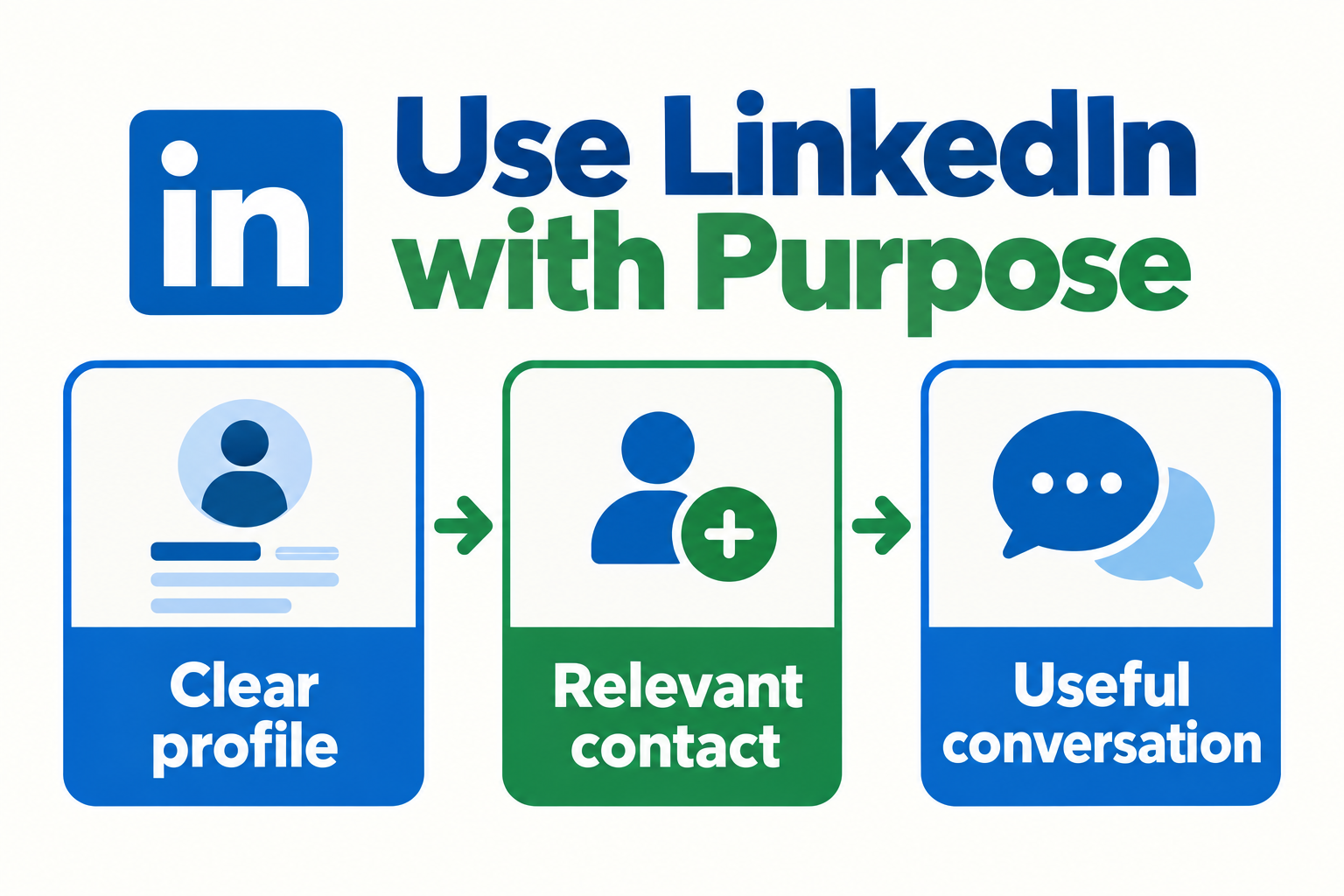
A clear profile can help someone find you; a useful conversation can establish interest; an application and interview can support assessment. These are connected stages, not interchangeable shortcuts.
Make Your Next Session Purposeful
Choose one profile improvement, one suitable vacancy and one relevant contact. Complete those actions before expanding the search. Review whether your activity is producing useful information or conversations rather than only views and connection requests.
Keep what helps you move toward suitable work. Reduce activity that consumes time without clarifying your target, evidence or next step.
Frequently Asked Questions
Do I Need LinkedIn Premium to Get Hired?
No subscription can guarantee a hiring outcome. Evaluate any paid features against a specific need and your budget rather than assuming they are required. A clear profile, relevant evidence, suitable applications and professional conversations remain important regardless of subscription level. Check current features before deciding whether a paid option is useful.
How Often Should I Post on LinkedIn?
There is no universal posting schedule that produces job offers. Contribute when you have something relevant and accurate to share, and balance activity with applications and interview preparation. Useful comments or a well-explained project can support conversations. Posting frequently without a clear purpose may simply consume time needed elsewhere.
Should I Turn on Open to Work?
Consider your search goals and privacy needs, then review the available visibility options. LinkedIn explains that recruiters-only visibility uses privacy measures but cannot guarantee complete privacy. The feature can communicate your preferences, but it does not ensure contact or an offer. Keep your desired roles and locations accurate.
Is It Okay to Message a Recruiter Directly?
Yes, when you have a relevant reason and use an appropriate professional channel. Identify the role or area of interest, explain your connection briefly and ask a clear question. Avoid repeated generic messages or unnecessary attachments. Follow the stated application process and respect that the recruiter may not be able to respond.



