

To demonstrate communication skills, show how you helped a particular audience understand information and act on it. Describe the situation, how you adapted your message and what became clearer as a result. Use relevant written examples, interview answers or permitted work samples instead of relying on the phrase “excellent communicator”.
Communication is not a contest for the loudest voice or the most polished accent. An employer may need someone who listens carefully, documents a decision, explains a risk or asks the question that prevents a mistake. Start with the communication task the job actually requires.
What a Recognised Communication Framework Includes
The National Association of Colleges and Employers’ communication competency framework, revised in March 2025, includes clear information exchange, listening, appropriate questions and awareness of audience differences. It is a career-readiness framework, not proof that any one delivery style predicts performance.
Use that breadth when choosing evidence. A concise written handover might be relevant for an operations position; explaining an uncertain finding might matter for an analyst. The strongest example reveals how you made another person’s work easier or their decision better informed.
Demonstrate Communication Skills Through the Audience’s Task
Before selecting an example, ask what the listener or reader needed to do. Were they approving a proposal, understanding a delay, resolving a customer issue or following a technical process? This anchors the story in a real purpose.
Next, identify the barrier. Perhaps the original explanation used unfamiliar terminology, the data was ambiguous or the participants had different priorities. Your contribution becomes clear when you explain how you reduced that barrier without hiding an important limitation.
A useful example might involve turning a technical report into a short decision note. Explain which detail you kept, which background you moved to an appendix and how you checked understanding. A beautiful slide deck is secondary to whether the audience could use it.
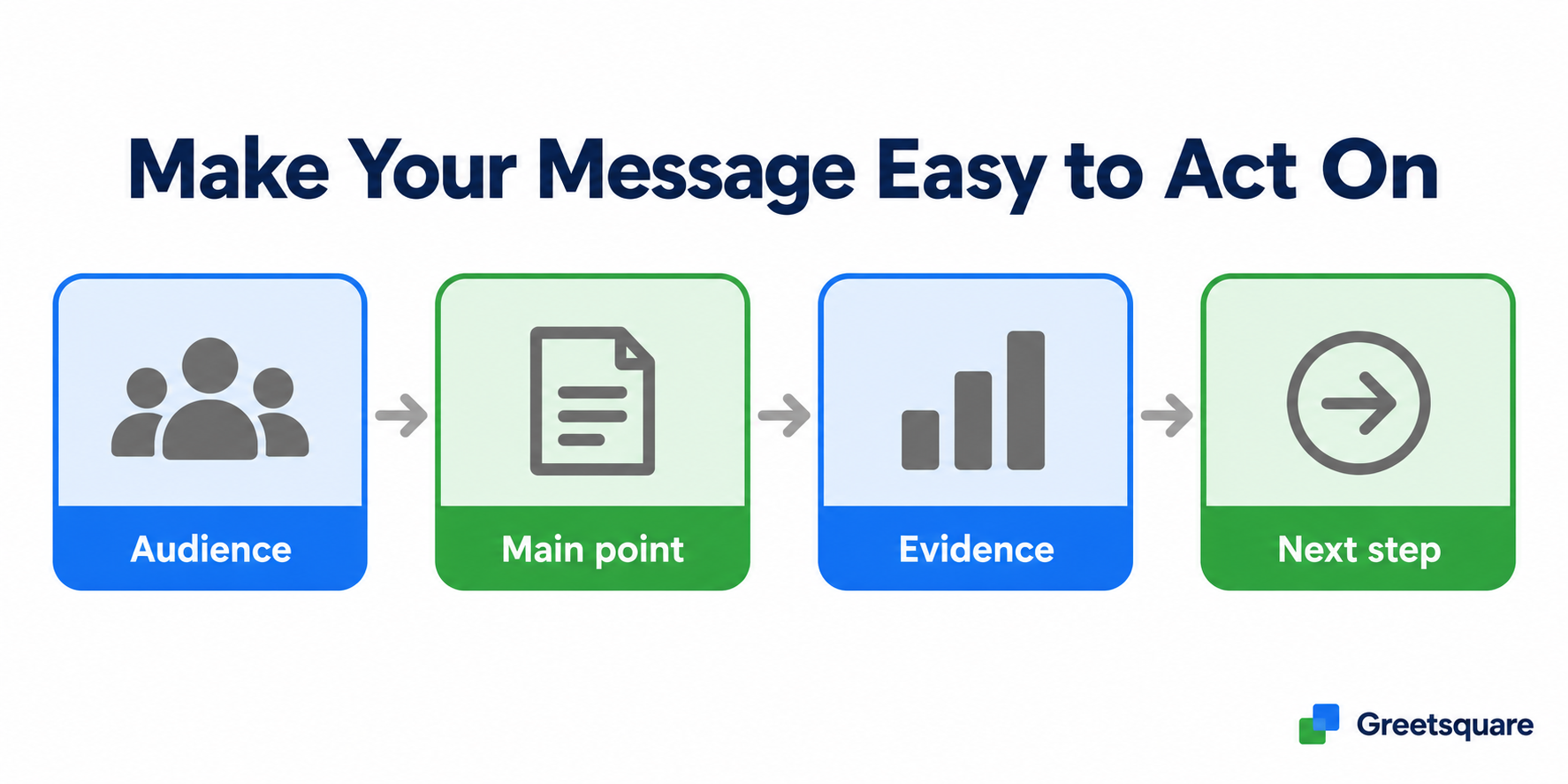
Use a Four-Part Message Framework
Audience and Main Point
Name the person or group receiving the message and their level of context. Then state the main point early. If your audience needs a decision, make the decision request visible rather than making them infer it from several paragraphs of background.
For example: “We need to move the release by one day because the final check has identified an unresolved issue.” This illustrative sentence makes the change and reason clear. The next sentences can explain impact and options.
Evidence and Next Step
Include enough evidence to support the point, while distinguishing facts from assumptions. Avoid hiding uncertainty behind confident language. If the evidence is incomplete, explain what still needs checking and who owns that work.
Finish with a concrete next step: a decision, a date, a named owner or a request for clarification. Communication often feels successful to the sender while leaving the receiver unsure what happens next. Closing that gap is a useful skill to demonstrate.
Turn a Resume Claim Into a Specific Example
Replace a general skill label with an action that shows communication in context. “Prepared weekly updates for a cross-functional team” gives a starting point, but it still leaves the reader wondering what made your updates effective.
A stronger truthful statement might explain that you separated urgent decisions from routine progress and recorded owners for unresolved items. Add a measurable outcome only if you have a sound basis for it. Otherwise describe the observable change, such as an agreed process or clearer ownership.
Tailor the example to your level. A graduate can describe a project presentation or volunteer handover; a senior candidate should show communication across complexity, disagreement or accountability. Our guide to hiring expectations by job role helps you judge the difference.
Show Listening and Judgement in the Interview
Listen for the actual question before starting your prepared story. If the scope is unclear, ask a brief clarifying question. You can then give a direct answer and explain the relevant example without forcing every question into the same script.
When discussing a disagreement, describe each side fairly. Explain the information you sought, how you checked understanding and why the eventual decision was workable. Do not present colleagues as unreasonable simply to make your own communication look better.
For a structured introduction, our “tell me about yourself” guide can help you select relevant context. Keep the fuller evidence available for follow-up questions, where the interviewer can examine your reasoning.
Choose Work Samples That Respect Confidentiality
A short process explanation, anonymised briefing or clearly labelled simulation can show how you organise information. Include a sentence about the audience and purpose so the reviewer knows what they are assessing. A sample without context can be difficult to interpret.
Use only material you have permission to share. Removing a company logo does not automatically make an internal document suitable for public use. When necessary, create a fresh example using public or fictional information and label it honestly.
Use Video as a Focused Communication Sample
A video introduction can show how you explain one relevant achievement or idea. Start with the main point, add a concise example and close with its relevance to the vacancy. Use natural pacing and clear audio rather than trying to perform a different personality.
Our guide to what employers judge in a video resume explains what the format can reveal. If the employer accepts it, prepare a short introduction with Greetsquare as a supplement to your written application.
Review for Understanding Before Reviewing Style
Ask a practice listener to repeat the main point and next step. If they cannot, revise the structure before adjusting delivery. Check whether an unfamiliar term needs explaining and whether the example contains more background than the audience needs.
Then review tone, pace and length. The aim is a useful explanation that still sounds like you. Select one example for your resume and one for an interview, and connect both to the behaviours employers need in the role.
Frequently Asked Questions
How Do I Show Communication Skills on My Resume?
Describe a communication task, the audience and what your action helped achieve. Examples include clarifying requirements, explaining a finding or documenting a handover. Use results you can support, and avoid relying solely on adjectives such as articulate or persuasive without explaining the work behind those descriptions.
What Is a Good Interview Example of Communication?
Choose a situation where someone needed to understand information or make a decision. Explain the audience, the difficulty, how you adapted your message and the outcome. Include how you listened or checked understanding, and make your personal contribution clear without claiming responsibility for everyone else’s work.
Can Introverts Demonstrate Strong Communication Skills?
Yes. Communication includes listening, writing, asking useful questions and explaining information clearly, not only speaking frequently. Choose examples that show how your approach helped an audience understand or act. You do not need to adopt an extroverted performance style to demonstrate behaviour relevant to the job.
How Can I Practise Communication Before an Interview?
Explain one relevant example to someone unfamiliar with your work. Ask them to repeat the main point, supporting evidence and next step. Use their response to remove unnecessary background or clarify terminology, then practise again while keeping the delivery natural rather than memorising every sentence of a script.



