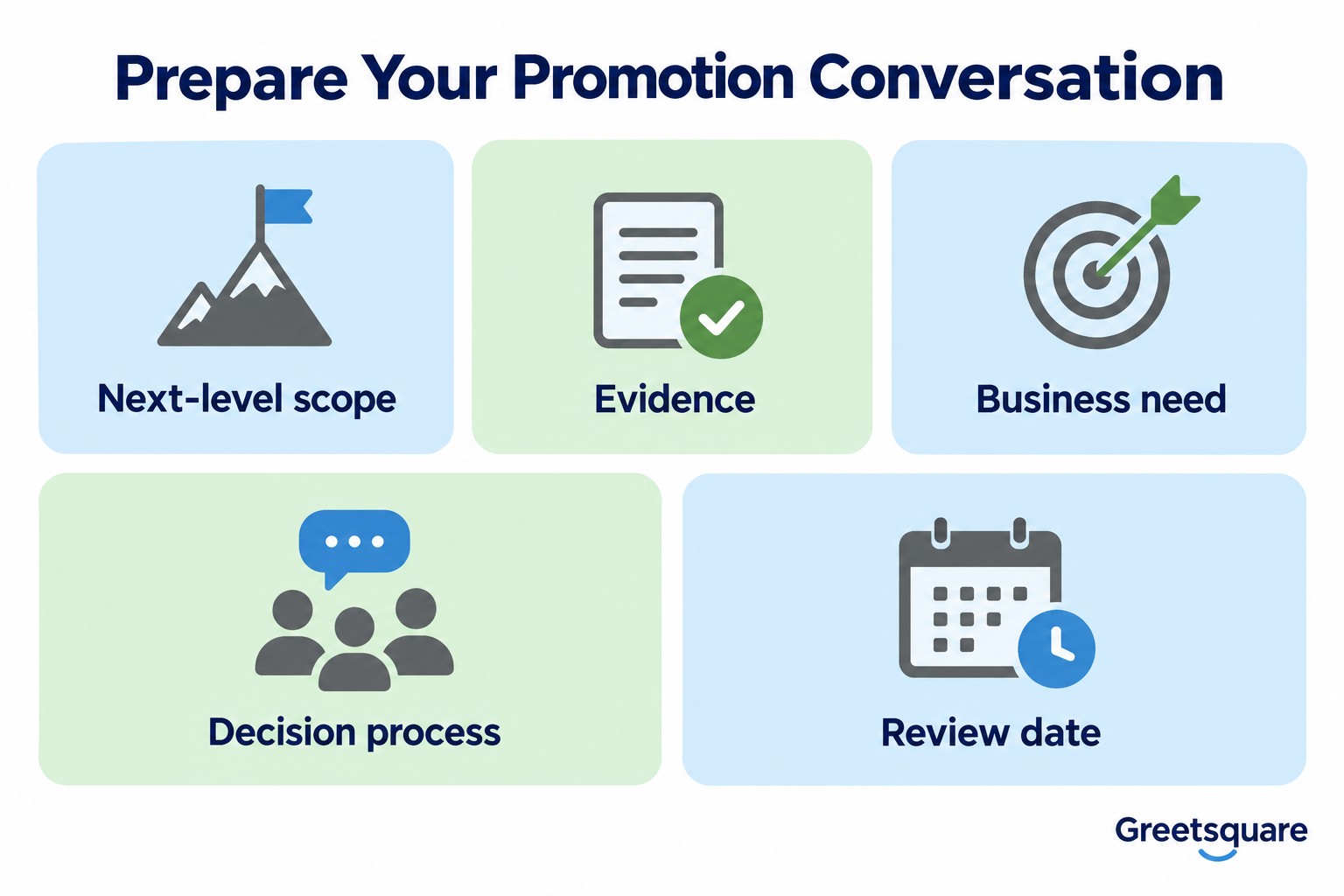
How to ask for a promotion starts with understanding the next role, gathering evidence that you can handle its responsibilities and requesting a focused discussion with your manager. Explain the contribution you can make at that level, then ask about the decision process and criteria. Strong performance helps your case, but does not guarantee a promotion is available.
The conversation becomes more useful when both sides discuss the same change. A higher salary, a new title, broader responsibilities and formal people management are related possibilities, but they are not identical. Define what you are asking for before building the argument.
What Fair Employment Guidance Adds to Promotion Discussions
TAFEP’s fair employment guidance calls for fair opportunities for development and rewards based on ability, performance, contribution and experience. It provides a useful reference for discussing evidence and transparent expectations. It does not establish an automatic entitlement to promotion after a particular period of service.
Use your employer’s role framework and process to understand the actual decision. Ask which responsibilities distinguish the next level and who assesses readiness. A clear framework is more useful than guessing whether visibility or tenure will be enough.
How to Ask for a Promotion by Defining the Change
Write down the role or level you want, the additional responsibility it involves and why the organisation needs that contribution. If there is no defined vacancy, ask whether progression within the role is possible. Do not assume that every company has the same career ladder.
Distinguish doing more tasks from operating at a higher level. Next-level work may involve greater judgement, wider impact, more complex coordination or accountability for other people’s work. Compare the scope with our guide to job roles and seniority while using your employer’s definitions as the decision framework.
Build Evidence of Readiness
Show Sustained Contribution
Choose examples across a meaningful period, not only the most recent successful project. Explain your responsibility, the judgement required and the outcome. Include reliable results where appropriate, while protecting confidential information and separating your actions from the team’s wider achievement.
A useful case may show that colleagues rely on your planning, that you resolve complex dependencies or that you improve a recurring process. Explain how those actions relate to the next role. Additional effort alone does not show that you are ready for different accountability.
Identify Gaps Honestly
Ask what you have not yet demonstrated. Perhaps you need to manage a larger dependency, coach someone or make a decision with less supervision. Recognising a gap can make the discussion more practical than insisting that your record has no weaknesses.
Do not promise to take on unlimited extra work to prove commitment. Agree a suitable opportunity, support and boundaries. A stretch assignment should produce relevant evidence without obscuring your existing responsibilities or becoming an indefinite informal promotion.
Choose Timing That Fits the Decision Process
Ask about review cycles, budget planning and approval stages before assuming the decision can happen immediately. Raise your interest early enough for your manager to explain the process and gather information. Avoid relying on a surprise request at the end of an annual review.
A recent achievement can provide a useful opening, but context matters. A restructuring, hiring freeze or unclear role design may affect availability even when your performance is strong. Ask what is possible now and what needs to be resolved first.
Prepare a Concise Discussion Note
Use a short note containing the requested level, its scope, two or three examples of relevant contribution and the questions you need answered. Give your manager enough context to prepare. The note should support a conversation, not overwhelm it with a full project archive.
| Part of the Case | Useful Detail |
|---|---|
| Requested change | Role, level or added accountability |
| Evidence | Your action and a supported result |
| Business relevance | Work the team needs at that level |
| Decision questions | Criteria, approver, timing and gaps |
Use our communication evidence guide to make the explanation clear. A well-organised case should be understandable to someone who did not attend every meeting or see the work happen.
Use a Direct Conversation Opener
An adaptable opener is: “I would like to discuss progressing to [level]. The role involves [scope], and I have examples of contributing in that area. Could we review my readiness and the process for a decision?” Replace the brackets with your actual situation.
Then explain one example and invite your manager’s view. Ask which evidence is convincing and which remains missing. Listen for whether the issue is your readiness, the organisation’s needs or the practical timing of an approval.
Keep comparisons with colleagues out of the centre of the case. You may not know their full responsibilities or circumstances. Your strongest argument explains the work you can handle and the contribution the organisation would receive.
Handle a Delayed or Negative Answer Productively
If the answer is “not yet”, ask what would need to change. Request observable criteria and a realistic review date. “Be more strategic” is difficult to act on unless your manager can describe the decisions, scope or behaviour they expect to see.
If the role is unavailable, discuss alternatives such as a defined development opportunity, internal move or review of your current responsibilities. Do not interpret a training offer as a commitment to a future promotion unless that commitment is actually made.
After the meeting, summarise agreed actions, owners and timing. If repeated discussions produce no clear pathway, assess your options using evidence about the work and your priorities. Avoid turning disappointment into an ultimatum you do not intend to follow through.
Discuss Compensation in the Right Context
A promotion may involve pay, but first clarify the level and scope. Use the Singapore salary benchmarking guide to understand comparable responsibilities rather than choosing the highest figure attached to a similar title.
Our salary negotiation guide addresses the compensation conversation. A pay review for existing work can still be appropriate even when a promotion is not available; keep the two requests clear.
Leave With a Decision or an Actionable Next Step
Before closing, confirm what was decided and what remains open. If you need to demonstrate a new capability, agree the task, support and way it will be assessed. A clear next step is more useful than a positive conversation with no follow-through.
If you later pursue an external move and an employer accepts video introductions, use Greetsquare to explain your relevant contribution. For the promotion itself, focus on work evidence and your organisation’s process. Revisit the agreed criteria rather than guessing what your manager meant.
Frequently Asked Questions
When Is a Good Time to Ask for a Promotion?
Ask early enough to understand your employer’s review and approval process. A recent achievement can support the discussion, but role availability, business needs and budget timing also matter. Request a focused meeting and ask what evidence, decision-makers and milestones are involved rather than expecting an immediate answer.
What Evidence Should I Bring to a Promotion Meeting?
Bring examples that show readiness for the next level’s responsibilities. Explain your contribution, the judgement involved and supported outcomes across a meaningful period. Connect the evidence to business needs, distinguish team results from your own actions and identify any gaps you still need an opportunity to demonstrate.
What Should I Do if My Promotion Request Is Declined?
Ask whether the barrier is readiness, timing, budget or role availability. Request specific criteria, suitable development opportunities and a review date where appropriate. Summarise what was agreed, and avoid treating general encouragement as a promise. Use repeated unclear answers as information when considering your longer-term career options.
Is Asking for a Promotion the Same as Asking for a Raise?
No. A promotion usually changes level, scope or accountability, while a pay review can concern compensation for your existing work. They may occur together, but clarify which change you want. Discuss the responsibilities and evidence first, then address compensation in the context of the employer’s process.