
To explain an employment gap, briefly state the reason for the break, clarify your current readiness and connect the conversation to the role. Keep dates accurate and avoid inventing employment, projects or qualifications to fill the timeline. A clear explanation is more useful than a long apology.
You do not need a dramatic story. The employer needs enough context to understand your work history and assess whether you can meet the role’s requirements now.
What Resume Guidance Says About Gaps
CareerOneStop’s special resume tips address gaps as a presentation issue within a wider work history. Different situations may call for different emphasis, rather than one format that suits every applicant.
Use that flexibility to make your history understandable, not to disguise it. A resume can select relevant experience while still giving accurate dates and honest descriptions. No formatting choice can guarantee that an employer will not ask about a break.
Use a Simple Structure to Explain an Employment Gap
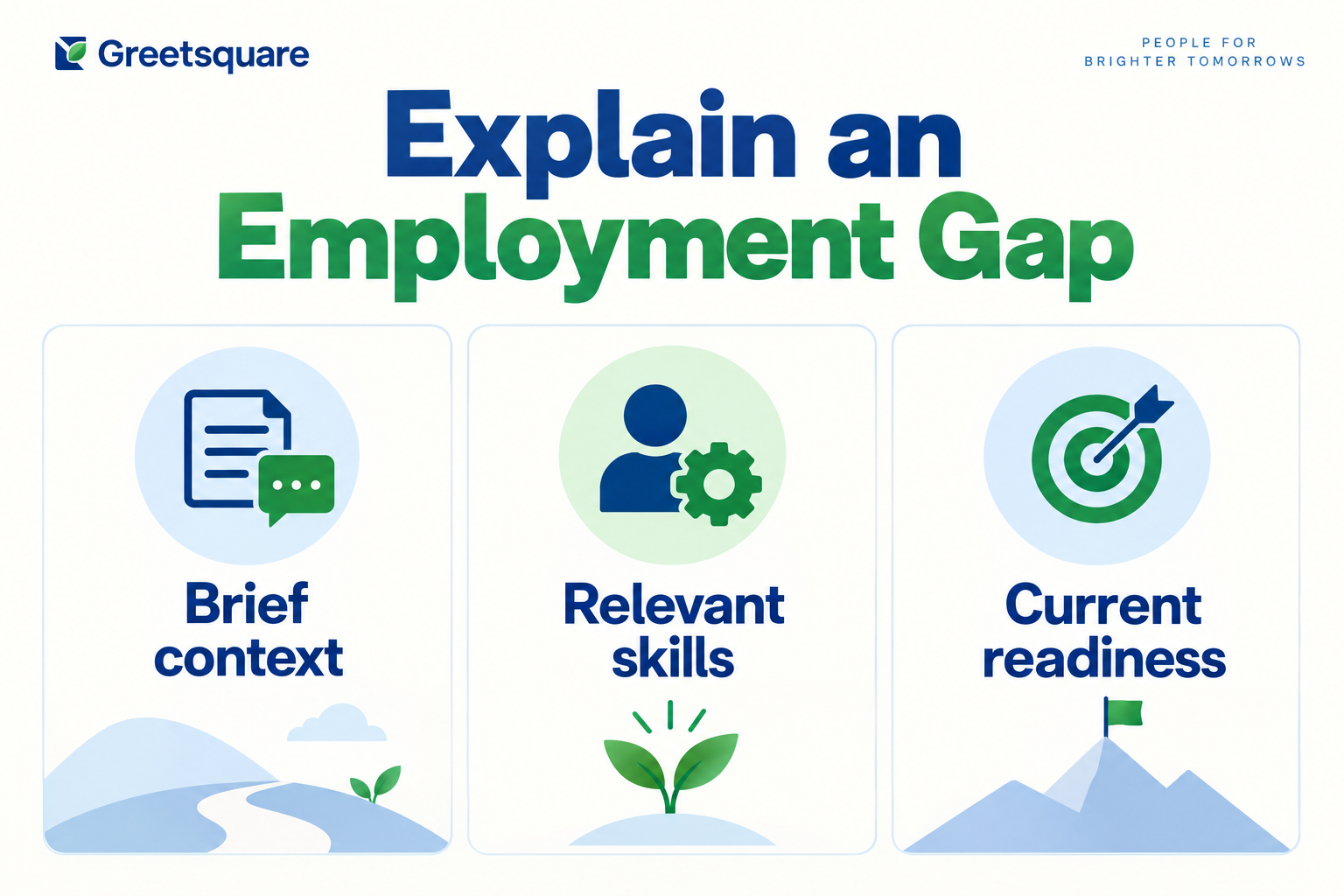
Prepare three parts: brief context, relevant activity if there was any, and your present readiness. Not every break includes a course, freelance work or volunteering. Include those activities only when they actually happened and add useful information.
For example: “I took a career break to manage family responsibilities. I am now able to commit to the working pattern we discussed and am looking to return to operations work.” This explains the transition without pretending that private responsibilities were paid employment.
Another example might be: “My previous role ended during a restructuring. Since then I have focused on suitable analyst positions and completed a small reporting project to refresh my skills.” The project should be described accurately if the interviewer asks for detail.
Decide What Belongs on the Resume
A recent or substantial break may benefit from a short labelled entry, such as Career Break, with accurate dates and a brief description. A short interval between roles may not need its own section. Use judgement based on whether the timeline would otherwise be confusing.
Keep your date format consistent. Do not change selected dates to make a gap disappear or imply continuous employment where none existed. If an application form asks for a complete history, answer the form’s question accurately even when your resume is more selective.
Focus the rest of the document on evidence relevant to the vacancy. The gap should not occupy more space than the experience that supports your suitability. Our guide to a stuck job search can help you distinguish timeline questions from broader targeting or application problems.
Describe Different Situations Without Overexplaining
Redundancy or a Role Ending
Use a factual description of what happened. If the role ended through restructuring, say so without speculating about other people’s motives. Then explain the kind of work you are pursuing and the experience you bring.
Avoid turning the answer into a detailed criticism of the former employer. You can acknowledge a difficult transition while keeping the interview focused on the new role. If a question requires more detail, answer that question directly.
Family Responsibilities or a Personal Break
State the broad context you are comfortable sharing and address practical availability. You can discuss your ability to meet the advertised schedule without recounting private family circumstances. Avoid promising that all future personal responsibilities have disappeared.
If arrangements are now in place, describe only the work-related consequence, such as being available for the agreed hours. The important point is whether you can meet the current requirements, not whether the interviewer knows every detail of the past.
Study, Travel or a Career Change
Name the activity accurately and explain its relevance only where a real connection exists. A course can demonstrate learning, but completion alone does not establish professional mastery. Travel may explain time away without needing to become an elaborate leadership claim.
If you explored a business or freelance work, distinguish research, a personal project and paid client work. These can all be valid activities, but they are not interchangeable descriptions of employment.
Show Current Readiness with Recent Evidence
Choose an example that reflects the skills the role needs now. This might be recent work, a refresher course, a practical exercise or a project using public data. Explain what you did and what it shows, including its limitations.
For a fictional returner to office administration, a small scheduling and record-checking exercise could help them practise current tools. It should be labelled as a self-directed exercise, not a client engagement or a business achievement.
You do not have to manufacture an activity for every month of the break. One relevant, well-explained example can be more useful than a long list of loosely related courses selected only to fill space.
Practise the Interview Answer Aloud
Write a short answer, say it aloud and check where it becomes defensive or too detailed. The first version often contains background that the interviewer did not ask for. Remove material that does not help explain the timeline or your readiness.
Practise a natural transition: “That period is now reflected accurately in my work history. The experience most relevant to this position is…” Then discuss a specific example rather than a vague claim that you are eager to prove yourself.
If the interviewer asks a follow-up question, answer honestly within the scope of what is relevant. You can keep personal details private while still explaining availability, experience and the facts of your employment history.
Keep the Story Consistent Across Formats
Check dates and descriptions across your resume, application form and professional profile. Small inconsistencies can create avoidable questions even when the underlying situation is straightforward. Use one factual record as your reference.
Where an employer accepts a short introduction, Greetsquare’s video resume option can help you practise or present a concise explanation. You do not need to make the gap the main subject of the video. Focus primarily on relevant work and current capability.
If you have returned to work and are exploring another move, the guide to job searching while employed covers scheduling and discretion. Your next application should reflect your actual current situation rather than reuse an outdated explanation.
Avoid Common Credibility Problems
Do not create a consulting title for a period when you had no consulting activity. Do not claim a course as employment or extend a former role’s dates. A gap is usually easier to explain than a contradiction you introduced to conceal it.
Also avoid promising more than you know about your future availability. Discuss the stated working requirements and your present ability to meet them. Clear practical information is more useful than an absolute assurance that nothing will ever interrupt your work.
Prepare One Clear Explanation Today
Write the accurate dates, a brief reason and a statement of current readiness. Add one relevant example of your skills. Check that the wording agrees with your application documents and feels natural when spoken.
Then return your attention to the role itself. The purpose of explaining the gap is to make the timeline understandable so the employer can assess your experience and contribution.
Frequently Asked Questions
Do I Have to Explain Every Employment Gap on My Resume?
Not every short interval needs a separate entry. Consider whether a recent or substantial break makes the timeline unclear, and follow any application form instructions requesting a complete history. Keep dates accurate. A brief explanation can help, but the resume should still focus mainly on evidence relevant to the vacancy.
Can I Call a Career Break Freelancing?
Only if you actually carried out freelance work. Describe its scope and dates accurately, and distinguish paid client work from research or personal projects. Do not invent an employment label to cover time away. A truthful career-break entry is more credible than a description you cannot explain or support.
How Much Personal Detail Should I Share?
Share enough relevant context to explain the timeline and your current readiness. You can usually keep the description broad and focus on availability and suitability. Avoid including private details simply because you feel obliged to justify the break. Prepare a concise answer that you are comfortable discussing in an interview.
Will an Employment Gap Stop Me Getting Hired?
An employment gap does not produce the same outcome with every employer or role. Hiring decisions depend on requirements, evidence and other factors. Explain your history honestly and show current capability. No wording can guarantee acceptance, but clear dates, relevant examples and a concise explanation can reduce avoidable confusion.



