

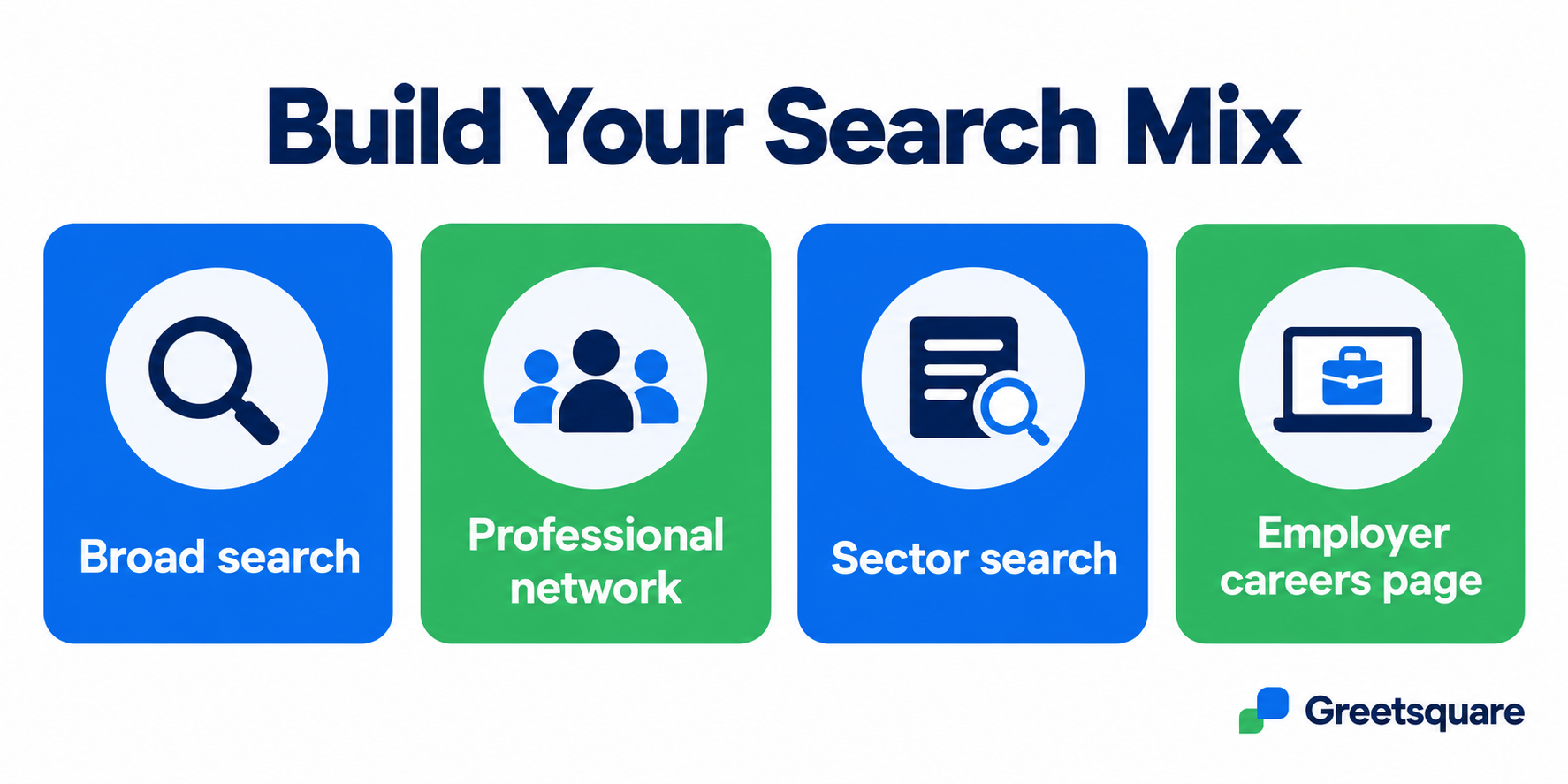
Which job portals should you use in Singapore? Start with channels that show suitable vacancies for your target role, then add a complementary source. MyCareersFuture, Jobstreet and LinkedIn offer different ways to discover work; a specialist board or employer careers page may add relevant coverage. The best job portals in Singapore for your search depend on the work you want and the listings currently available.
What the Platforms’ Own Information Shows
MyCareersFuture describes a national platform focused on job matching, skills and career resources. Jobstreet’s Singapore site provides job search across occupational categories, alongside company information and saved-job tools. These are useful differences to investigate, rather than proof that one platform will produce a better outcome for every applicant.
LinkedIn’s job-search guidance distinguishes applications completed on LinkedIn from listings that direct applicants to another website. Its job-alert guidance explains alerts based on search preferences. Features and listings change, so this comparison uses a practical selection framework rather than fixed vacancy counts or a promised response rate.
Define Your Search Before Choosing a Portal
Write down the function, experience level, location and essential conditions you are targeting. Search related job titles where employers use different names for similar responsibilities. Check the actual work in each advertisement: two results with the same title may describe very different positions.
If the role itself is unclear, begin with the job roles guide. Choosing a portal will not resolve a mismatch between your experience and the vacancies you select. A clear target makes it easier to judge which source adds useful opportunities and which simply adds more browsing.
| Channel | Useful Starting Purpose | What to Check |
|---|---|---|
| MyCareersFuture | Search Singapore opportunities with a skills focus | Role requirements and relevant matching information |
| Jobstreet | Explore vacancies across occupational categories | Responsibilities, employer details and current listing status |
| Combine job discovery with professional research | Application destination and relevant company context | |
| Specialist board | Investigate a defined profession or sector | Whether its current vacancies match your target function |
| Employer careers page | Check a specific employer’s advertised opportunities | Current requisition and official submission instructions |
Use MyCareersFuture for Skills-Based Exploration
Use the role requirements to examine how your experience connects to the work. A skills-oriented search can help identify nearby roles you might overlook when searching only one title. Review the responsibilities and stated criteria before deciding that a matching suggestion is a suitable application.
Do not confuse a portal recommendation with an employer’s decision. Your eligibility and fit still depend on the vacancy. Record relevant listings, compare the main requirements and select examples you can explain. Use the platform’s career resources when they help answer a specific search question rather than treating every suggestion as an instruction to apply.
Use Jobstreet for Broad Vacancy Discovery
Jobstreet’s occupational categories can help you compare how different employers describe similar work. Search the target title, then inspect related terms that appear in suitable advertisements. Broad browsing is useful at the beginning of a search, but it should lead to a clearer shortlist rather than an ever-growing collection of unrelated roles.
Review company information alongside the job description. Separate employer-provided claims, individual reviews and the actual terms in the advertisement. None is a substitute for asking relevant questions during the hiring process. Save the vacancy details you need for preparation because a listing may change or disappear after you apply.
Use LinkedIn for Jobs and Professional Context
LinkedIn can combine searching for vacancies with researching employers and professional backgrounds. Use the job requirements to guide your preparation, then look for relevant context about the organisation or function. Avoid substituting familiarity with a company’s posts for an understanding of the advertised work.
Check whether the application stays on LinkedIn or moves to an external website. Follow the destination’s instructions and confirm that you completed the submission. An external application may require a separate record. The LinkedIn job-search guide covers profile and activity considerations; this article focuses on where LinkedIn fits within your channel mix.
Add Specialist Sources When They Improve Relevance
A board focused on a profession or sector may surface terminology and vacancies that broad searches miss. Test it with the same role criteria you use elsewhere. Check the current listings, locations and seniority levels before investing time in a detailed profile or assuming that a specialist label means every vacancy fits your background.
For finance-focused searches, eFinancialCareers is a source to investigate, but evaluate its live coverage for your function and Singapore location rather than assuming uniform results across accounting, banking, technology and other roles. Professional associations and employer careers pages can also be useful where they advertise relevant openings. Verify the current application instructions at the destination.
Prevent Duplicate Applications Across Portals
The same vacancy can appear in several places. Keep one tracker with the employer, role, requisition number where available, location, source and application date. Compare these details before submitting again. A repeated listing is not automatically a separate opportunity, and applying repeatedly does not necessarily improve your visibility.
Hypothetical example: you find a role on a broad portal and later see it on the employer’s website. The title, team and requisition match. Record the second source against the existing entry and follow the employer’s instructions if a further action is required. Do not create a second application simply because you found another link.
Turn Alerts into a Shortlist
Use focused alerts where available, then review them for relevance at a manageable interval. Narrowing by function and location can reduce noise, while testing related titles can reveal useful alternatives. If an alert repeatedly produces unsuitable work, adjust the criteria instead of assuming that more notifications mean a stronger search.
Evaluate a channel by suitable vacancies found, distinct opportunities added and the effort needed to review them. Keep employer response and progression separate from raw listing volume. This gives you a practical way to decide whether a second portal complements the first or mostly repeats its results.
Tailor the Application After Discovery
Finding the vacancy is the start of preparation. Select evidence for its responsibilities and check the final documents. The resume tailoring guide explains how to adapt your emphasis while keeping the facts consistent. The Singapore job-search guide provides broader strategy beyond portal selection.
Where a video introduction is accepted, you can explore Greetsquare’s job-seeker platform as an additional channel for presenting relevant experience. Keep the requested written application complete. Choose a small, complementary set of sources, review the actual opportunities and improve the mix using what your search reveals.
Frequently Asked Questions
Which Job Portal Is Best in Singapore?
There is no best portal for every role and applicant. Compare current vacancies against your target function, experience level and location. Start with one broad source and a complementary channel, then review which adds distinct suitable opportunities. Listing volume alone does not show how well a portal serves your search.
Should I Apply for the Same Job on Several Portals?
Check whether the listings refer to the same vacancy before submitting again. Compare the employer, title, location and requisition number where available. Follow the employer’s instructions if another action is required. Keep one application record rather than assuming that repeated submissions across different websites will improve your chances of selection.
Can I Use LinkedIn Instead of an Employer Careers Page?
Follow the vacancy’s application instructions. Some LinkedIn listings accept applications there, while others direct you to an external website. Complete the required process at the stated destination and record the submission. Finding a role or saving it on LinkedIn is different from completing an application through the employer’s chosen system.
How Many Job Portals Should I Use?
Use enough to find relevant opportunities without creating unmanageable duplication. Begin with a broad source and one channel that adds different coverage, then assess the results. Add or remove sources based on suitable vacancies and review effort. A focused search mix can be more useful than maintaining many inactive accounts.



