

How long does it take to find a job? There is no reliable deadline for an individual search. Your target roles, preparation, suitable vacancies and employer processes affect the timing. Build a job-search timeline around stages you can track, then update it with confirmed employer dates. Avoid treating a generic estimate as a promise or a judgement of your ability.
What Unemployment Duration Statistics Actually Measure
MOM defines duration of unemployment as complete weeks from first taking action to look for work to the survey interview. That measure is different from the completed time between starting a search and receiving an offer. The distinction matters when interpreting a headline about how long finding work takes.
MOM’s uses and limitations guidance connects longer unemployment duration with possible labour-market difficulties and expectations. It does not provide a personal completion date. The planning approach below uses stages and review points rather than converting group statistics into a countdown for your next job.
Separate the Search into Measurable Stages
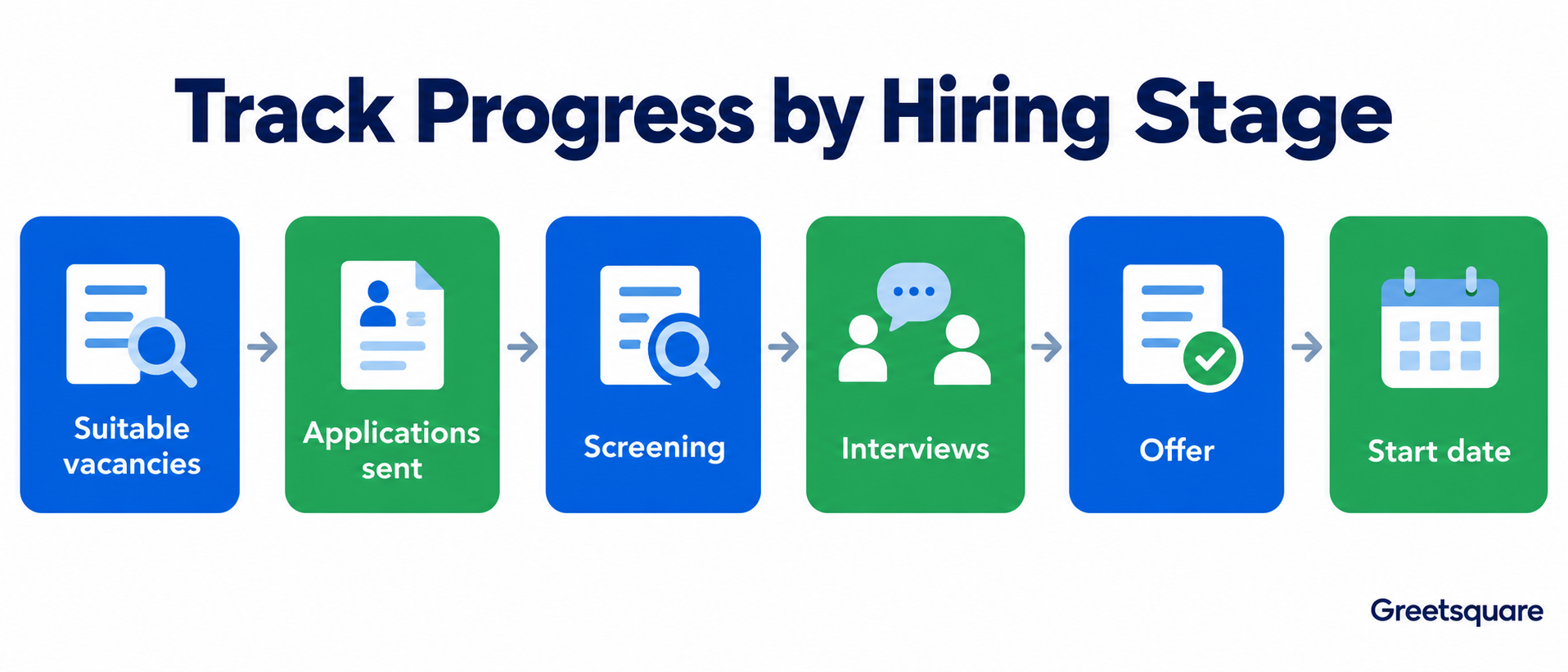
Your search may involve choosing roles, preparing evidence, finding suitable vacancies, applying, screening, interviews, assessments and offer review. These stages can overlap. You may be researching one employer while interviewing with another, so a single start-to-finish line can hide where time is actually being spent.
The Singapore job-search guide covers the wider strategy. For timing, identify your current stage and the next observable event. “Waiting for the recruiter to confirm an interview date” is more informative than “the search is not working.” Record what is confirmed, what is expected and what remains unknown.
| Stage | Record | Useful Review Question |
|---|---|---|
| Targeting | Role families and essential criteria | Am I finding suitable vacancies? |
| Applications | Date, version and vacancy deadline | Is the evidence relevant and complete? |
| Screening | Contact and next step | What does the employer need clarified? |
| Interviews | Round, format and expected update | What preparation is needed next? |
| Offer and start | Conditions, decision date and start date | What still needs confirmation? |
Allow Time for Preparation Without Waiting for Perfection
Prepare a base CV, a small bank of genuine examples and a record of your availability. This reduces the need to start from nothing for each vacancy. It does not mean every application should be identical. Choose the evidence that matches the responsibilities and check the employer’s required documents.
Set a practical work session for reading, adapting and checking an application. Adjust it for a substantial statement, portfolio or assessment. The resume tailoring guide helps you make those changes efficiently. Stop polishing when the information is accurate, relevant and ready for the requested submission rather than delaying indefinitely for ideal wording.
Understand What Employer Timelines Can Change
A vacancy may have a closing date, several interview rounds, an assessment or an approval step. Some employers review applications as they arrive; others may wait until a stated date. Ask about the process where there is an appropriate contact rather than assuming that every company works on the same schedule.
The interview and application process guide explains those stages. Use the employer’s expected timing as a planning input, and record an update if it changes. An expected date is still different from a commitment that you will progress or receive an offer.
Distinguish Waiting from a Stage That Needs Work
If you cannot find suitable vacancies, examine the role definition, search terms and channels. If suitable applications do not lead to screening over a meaningful review period, examine relevance and completeness. If interviews repeatedly stop at a similar point, review your examples, understanding of the role and available feedback.
These are diagnostic questions, not proof that one issue caused a rejection. Compare similar roles and account for closing dates before judging a pattern. Avoid changing your target career, CV and interview approach after every unanswered application. The job-search survival guide provides a broader framework for investigating stalled progress.
Use a Review Routine You Can Sustain
Choose a regular review point that fits your circumstances. For example, a weekly review could cover new suitable vacancies, applications submitted, upcoming interviews and overdue updates. This is an illustrative routine, not a rule that employers respond within a week or that a fixed application quota produces a job.
At each review, identify one useful change. You might improve an evidence example, adjust an alert or prepare for a confirmed assessment. Keep the facts behind each change so you can evaluate it later. Record employer responses separately from your own activity; completing more tasks does not automatically mean progressing further in hiring.
Follow Up Using the Actual Process
Ask when the employer expects to update you and which channel to use. If the stated time passes, send a concise request for an update or clarification of the next step. Keep other suitable applications moving while you wait. Repeated messages without new information can consume time without helping the employer respond.
The application and interview follow-up guide covers wording and timing considerations. Do not count every silent application as a confirmed rejection, but do not build your entire search around one uncertain outcome either. A tracker can preserve the distinction between active, closed and awaiting information.
Plan Separately for Starting Work
The date you receive an offer may differ from the date you can start. An employer may still need checks completed, while you may have existing commitments to resolve. Confirm the proposed start date and any outstanding conditions before making plans that depend on them. Do not infer readiness to start from a positive interview conversation.
Where a contract or notice obligation affects timing, check the actual terms and seek appropriate clarification. A general search article cannot determine your specific obligations. Keep the decision deadline, accepted terms and start arrangements in separate tracker fields so you do not accidentally treat one date as covering all three tasks.
Keep Optional Tools Proportionate
A profile update, portfolio example or video introduction may help you communicate relevant experience where accepted. It is useful when it supports a responsibility the employer needs to assess. It should not become another preparation project that prevents you from completing suitable applications.
You can explore Greetsquare’s job-seeker video tools if a recording fits your application. Use the video resume recording guide for practical preparation. Keep the required written materials complete and evaluate the tool by its purpose, not an unsupported promise that it will shorten your search.
Build Your Next Review Point
Write your current stage, the next confirmed event and one action you can take before it. Add the information still needed from the employer. This creates a usable plan even when the final date is unknown. Review the search using evidence from your applications rather than comparing yourself with someone else’s timeline.
Frequently Asked Questions
Does an Average Job-Search Duration Predict My Timeline?
No. A group measure does not determine an individual’s result, and statistics measure different periods. Check the source’s definition and population before interpreting it. Your roles, circumstances and employer processes can differ from the group described. Use the figure as context rather than a deadline you are expected to meet.
How Often Should I Review My Job Search?
Choose a regular interval that gives you enough information to make a useful decision. A weekly review is one practical example, not a universal requirement. Check suitable vacancies, completed applications and confirmed next steps. Avoid rewriting your entire approach repeatedly before comparable applications or employer timelines provide evidence to assess.
When Should I Follow Up on an Application?
Use the employer’s stated timing and contact instructions first. If an expected update passes, a concise message can ask about progress and information needed from you. Where no timing is given, consider the vacancy’s process and closing date. Continue other suitable applications instead of waiting indefinitely for one uncertain outcome.
Can a Video Resume Make My Job Search Faster?
A video may help explain experience where the employer accepts it, but it cannot guarantee a faster search. Hiring also depends on requirements, vacancies and employer decisions. Use the format for a clear communication purpose, keep written submissions complete and avoid delaying suitable applications while trying to create a recording.



